Whatsapp
 Enquiry Now
Whatsapp Enquiry Now

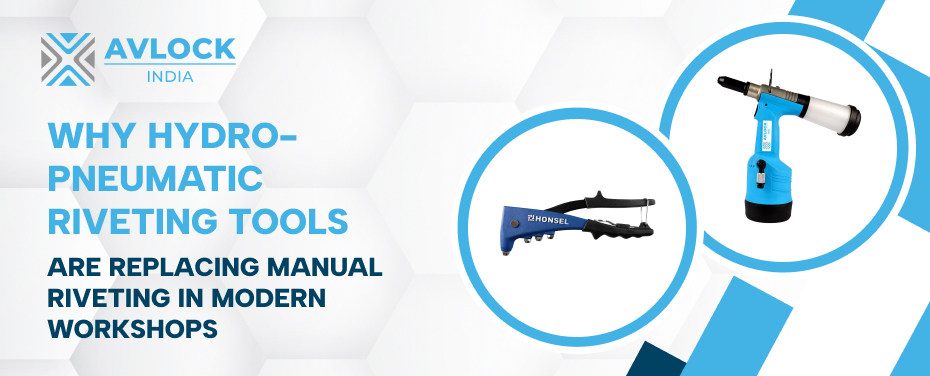
Across manufacturing floors, fabrication workshops, and production lines throughout India, a quiet revolution is underway. Manual riveting, long the backbone of panel fastening and assembly operations, is rapidly being displaced by hydro-pneumatic riveting tools that deliver faster cycle times, superior joint consistency, and dramatically reduced operator fatigue.
For workshop managers, production engineers, and plant procurement teams evaluating their fastening operations, understanding why hydro-pneumatic riveting tools represent the modern standard and how to make the transition is essential for staying competitive. This comprehensive guide examines the technology, benefits, ROI case, and selection criteria for hydro-pneumatic rivet installation systems.
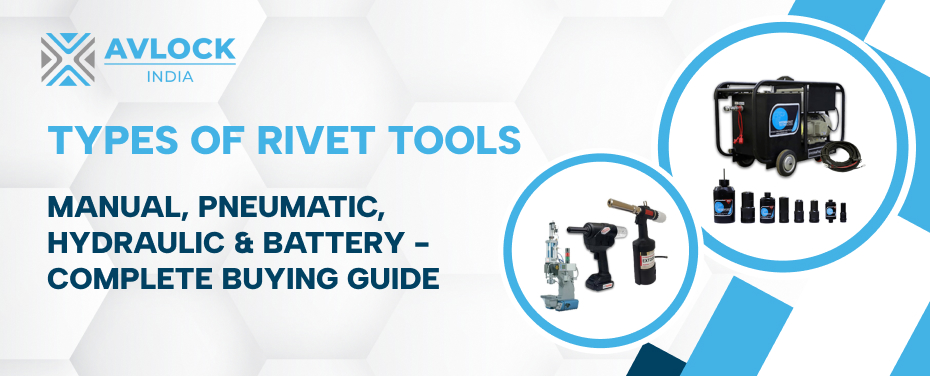
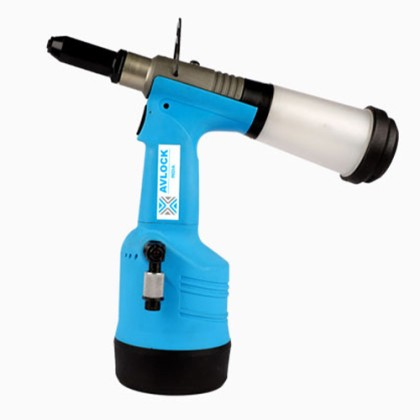
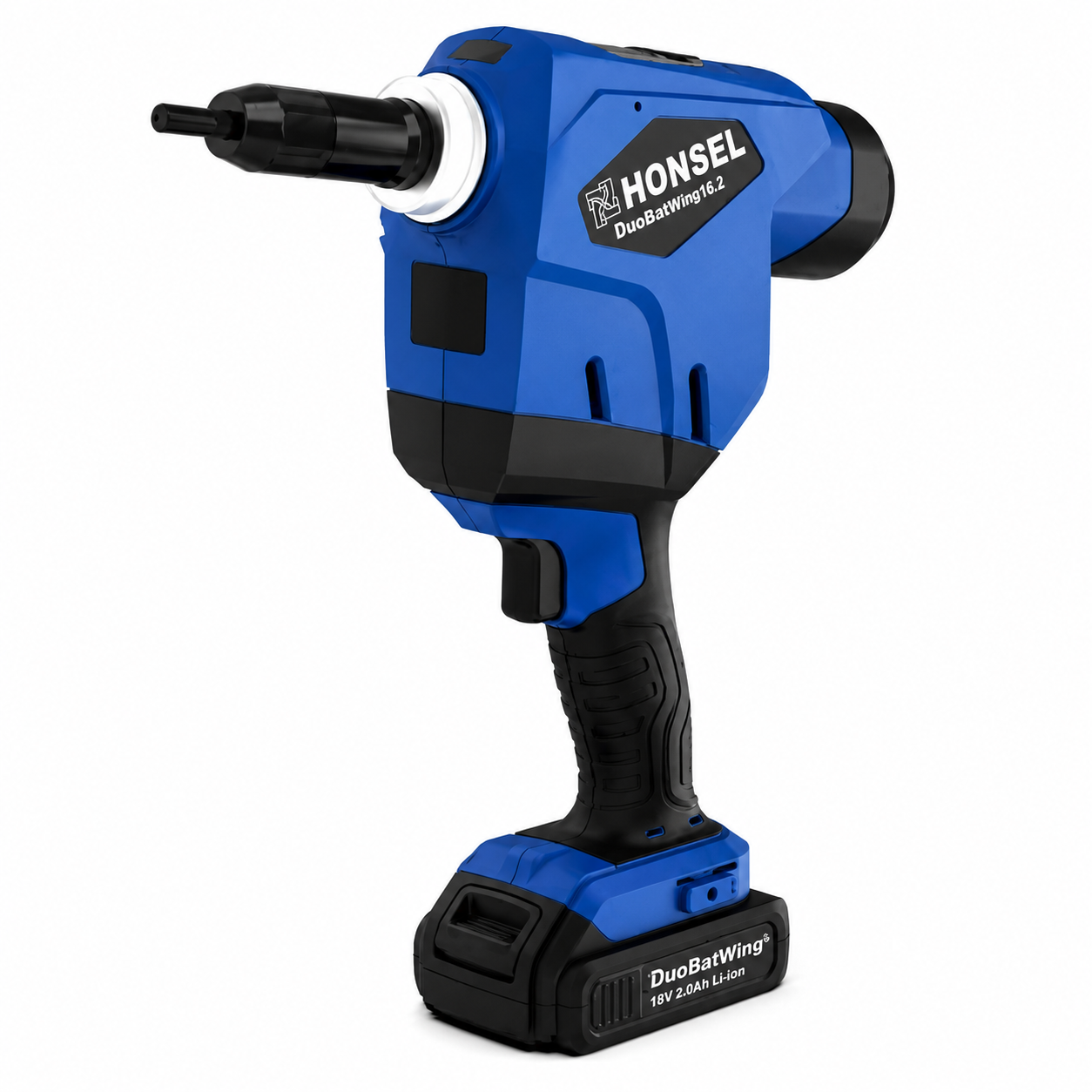
Hydro-pneumatic riveting tools (also called air-hydraulic rivet guns or pneumatic rivet installation tools) combine compressed air with a built-in hydraulic intensifier to multiply the available pulling force far beyond what direct-air tools achieve. The air drives a small hydraulic cylinder, which, through hydraulic pressure intensification, generates pulling forces of 15 kN to 50 kN or more from a standard compressed air supply.
This force generation method allows a single tool to handle blind rivets from 2.4 mm up to 10 mm in diameter, across all body materials, including aluminium, steel, and stainless steel, without operator physical effort.
1. The operator inserts the rivet and places the tool nose over the mandrel
2. The trigger is pressed, and compressed air enters the tool
3. The air drives a hydraulic pump piston, generating high-pressure hydraulic fluid
4. The hydraulic pressure drives the pulling jaw mechanism with high force
5. The mandrel is pulled, forming the blind head and setting the rivet
6. The mandrel breaks at the designed break point
7. The hydraulic system automatically retracts the jaws and ejects the mandrel
8. The tool is ready for the next cycle, typically within 1-2 seconds
|
Factor |
Hydro-Pneumatic Tool |
Manual Hand Tool |
Battery Tool |
|
Force Output |
Very High (15-50 kN) |
Low (up to ~8 kN) |
Medium (10-25 kN) |
|
Installation Speed |
Very Fast (1-2 sec/rivet) |
Slow (5-15 sec/rivet) |
Fast (2-4 sec/rivet) |
|
Operator Fatigue |
Very Low |
High, RSI risk |
Low |
|
Max Rivet Size |
Up to 10 mm diameter |
Up to 4.8 mm |
Up to 6.4 mm |
|
Body Material |
Al, steel, stainless, copper |
Aluminium only (typically) |
Al, steel, stainless |
|
Power Requirement |
Compressed air |
None |
Battery (rechargeable) |
|
Portability |
Moderate, air hose |
Excellent |
Excellent, cordless |
|
Production Volume |
High, ideal for production |
Low to medium |
Medium |
|
Consistency |
Excellent |
Poor, operator dependent |
Excellent |
|
Cost |
Medium-High |
Very Low |
Medium-High |
|
Maintenance |
Moderate |
Minimal |
Low |
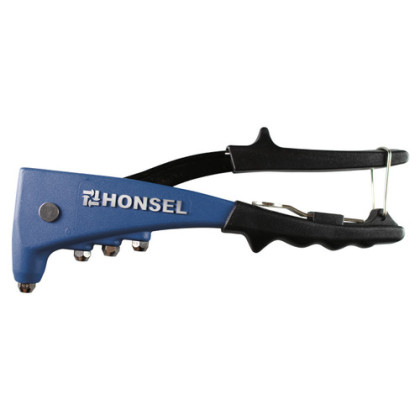
Manual riveting, particularly with large-diameter or steel rivets, demands significant repetitive hand and wrist force. Over the course of a production shift, this cumulative force creates a serious risk of Repetitive Strain Injury (RSI), reducing productivity and increasing absenteeism and workers' compensation exposure.
Hydro-pneumatic tools require only trigger activation; all force is generated by the air-hydraulic system. Operators can work full shifts without physical strain, maintaining production output throughout.
A trained operator using a manual rivet tool may install 80-120 rivets per hour on standard aluminium blind rivets. The same operator using a hydro-pneumatic tool can consistently install 400-600+ rivets per hour, a 4-5x productivity improvement that directly impacts unit economics and throughput targets.
Manual riveting quality is inherently variable, dependent on operator strength, technique, and fatigue level. Hydro-pneumatic tools deliver the same pull force for every rivet, every cycle, regardless of operator. This consistency is critical for ISO 9001 quality systems, automotive OEM supply requirements, and structural design compliance.
Manual tools simply cannot generate sufficient force to install steel structural rivets above 4.8 mm or aluminium structural rivets above 6.4 mm. Hydro-pneumatic tools with force outputs of 25-50 kN can handle the full range of structural blind rivets up to 10 mm, opening applications that were previously unavailable to blind riveting.
Quality hydro-pneumatic tools are built for industrial duty cycles and, with proper maintenance, deliver service lives of several years even at high production volumes. The per-rivet operating cost of a hydro-pneumatic tool, amortised over its service life, is substantially lower than the labour cost of manual riveting.
|
Industry |
Previous Method |
Why Switching to Hydro-Pneumatic |
|
Commercial Vehicle Bodies |
Manual hand tools |
Volume, steel rivet capability, and quality |
|
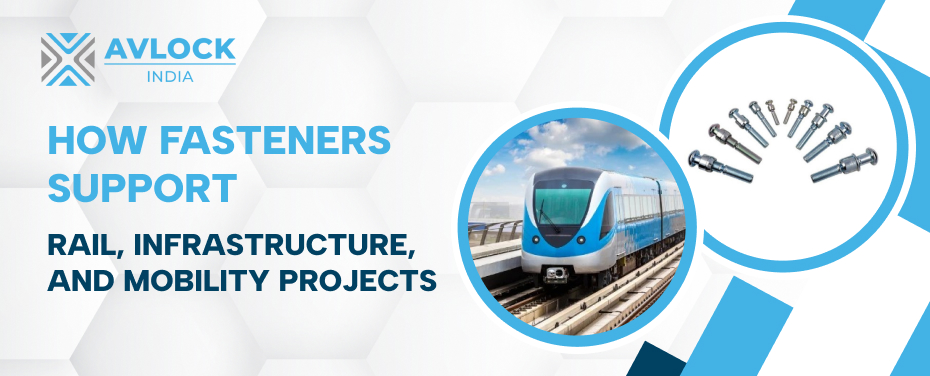
Rail Coach Manufacturing |
Manual and pneumatic |
Structural rivet sizes, consistency |
|
Agricultural Equipment OEMs |
Manual tools |
Steel body panels, productivity |
|
HVAC & Ducting Fabrication |
Manual tools |
Speed, operator welfare |
|
Industrial Enclosure Makers |
Manual tools |
Consistency, volume throughput |
|
Construction Prefabrication |
Manual and battery |
Large rivets, speed |
|
Shipbuilding |
Manual/pneumatic |
Force for structural grades, reliability |
Assuming a production scenario of 500 rivets per shift: Manual tool requires approximately 5-6 hours of riveting labor. The hydro-pneumatic tool completes the same 500 rivets in approximately 1-1.5 hours releasing operator time for other productive tasks. Over 250 working days, this productivity differential generates substantial labor cost savings.
Inconsistent manual riveting leads to field failures, warranty claims, and rework costs. Hydro-pneumatic installation eliminates the variability source, reducing quality costs that can significantly exceed the tool investment.
Avoiding even a single RSI-related absence and associated medical costs can recover a substantial portion of the tool investment. Long-term reduction in workers' compensation premiums compounds the return.
• For aluminium rivets up to 4.8 mm: 10-15 kN sufficient
• For steel rivets up to 6.4 mm: 20-25 kN required
• For structural steel rivets up to 10 mm: 35-50 kN required
• Most tools require 6-8 bar (90-115 PSI) supply pressure
• Air consumption: 6-12 liters per cycle typical
• Ensure compressor capacity matches peak demand of all simultaneous tool users
• Straight configuration: General assembly, open access
• Offset/angle nose: Confined spaces and corner installations
• Nose piece range: Confirm availability for all required rivet diameters
9. Conduct a fastener audit: Document all blind rivet specifications in current use
10. Map air supply: Verify existing compressor capacity and distribution infrastructure
11. Select tools: Match pull force, rivet size range, and configuration to application
12. Operator training: Hydro-pneumatic tools require minimal training — typically 1-2 hours
13. Pilot trial: Run a pilot on one assembly station before full rollout
14. Measure results: Track cycle time, reject rate, and operator feedback
15. Scale up: Roll out across production based on pilot results
16. Daily: Clear mandrel waste container, inspect nose piece for wear
17. Weekly: Check air inlet filter and lubricator oil level (if fitted)
18. Monthly: Inspect jaw mechanism, clean and lubricate per manual
19. Annually: Full service including hydraulic seal inspection and replacement if required
20. As needed: Replace worn jaws, worn jaws are the primary cause of poor installation quality
21. Insufficient air supply under-pressure causes incomplete rivet setting
22. Using the wrong nose piece size causes mandrel slippage and tool damage
23. Neglecting daily maintenance dramatically shortens tool service life
24. Exceeding the tool's rated capacity overloads the hydraulic components
25. Not training operators, even simple tools benefit from brief familiarisation
26. Buying without local service support critical in Indian manufacturing environments
Conclusion
The transition from manual to hydro-pneumatic riveting tools is one of the most impactful productivity and quality improvements available to Indian manufacturers and fabricators. The combination of dramatically increased installation speed, consistent joint quality, elimination of operator fatigue, and capability to handle structural-grade fasteners makes hydro-pneumatic tools the clear choice for any operation with meaningful riveting volumes.
As the leading supplier of industrial fastening solutions in India, Avlock India offers a comprehensive range of hydro-pneumatic rivet installation tools matched to our full product range of blind rivets, structural rivets, and lockbolts. Our application engineers can assess your current riveting operations, recommend the optimal tool configuration, and support implementation with operator training and after-sales service.
Q: What air pressure do hydro-pneumatic rivet tools require?
A: Most hydro-pneumatic rivet tools require 6-8 bar (approximately 90-115 PSI) of compressed air supply. Always check the specific tool's technical datasheet and ensure your compressor and distribution system can maintain this pressure during peak tool usage.
Q: Can hydro-pneumatic tools install structural rivets?
A: Yes. This is one of the primary advantages of hydro-pneumatic tools over manual alternatives. With pull forces of 20-50 kN, hydro-pneumatic tools can install the full range of structural blind rivets including large-diameter steel structural rivets that are impossible to install manually.
Q: How long does operator training take for hydro-pneumatic rivet tools?
A: Most operators become proficient with hydro-pneumatic rivet tools within 1-2 hours of hands-on training. The tools are trigger-operated and self-cycling, making them more intuitive than manual tools. Avlock India provides operator training as part of our tool supply service.
Q: What is the service life of a quality hydro-pneumatic rivet tool?
A: A quality industrial-grade hydro-pneumatic rivet tool, properly maintained, will typically deliver 3-7 years of production service. Jaw sets and nose pieces are the primary wear items and are inexpensive to replace, extending tool life significantly.
Q: Are hydro-pneumatic tools suitable for small workshops?
A: Yes, provided the workshop has a compressed air supply at the required pressure and flow rate. The productivity and quality benefits are valuable even in smaller operations that perform significant volumes of riveting. The return on investment is typically achieved within months for any operation installing more than a few hundred rivets per week.
Q: What is the difference between pneumatic and hydro-pneumatic rivet tools?
A: A direct pneumatic tool uses air pressure directly to drive the pulling mechanism, limiting force output to the air pressure multiplied by piston area. A hydro-pneumatic tool uses air to drive a hydraulic intensifier, multiplying the available force by a ratio of 10:1 or more — enabling much higher pulling forces from the same compressed air supply.
Email: marketing@avlock.co.in
Call: +91 22 25872300
WhatsApp: +91 91520 94678