Whatsapp
 Enquiry Now
Whatsapp Enquiry Now


The need for lightweight construction, structural integrity, and scalable manufacturing efficiency is redefining the future of EV chassis assembly. As electric vehicle platforms evolve, OEMs and Tier-1 suppliers face growing pressure to balance crash safety, durability, and high-volume production without compromising quality.
In this demanding environment, high-strength SFC fasteners have emerged as a critical enabler. Understanding how these advanced fastening systems support the future of EV chassis assembly helps manufacturers build reliable, compliant, and future-ready vehicle platforms.
EV chassis assembly differs significantly from internal combustion engine (ICE) platforms. Battery packs introduce concentrated mass that must be securely protected, while electric motors deliver instant torque that alters traditional load paths.
These changes increase stress at structural joints, making fastener performance more critical than ever. That is why the future of EV chassis assembly depends on fastening solutions that deliver consistent clamp force, vibration resistance, and long-term fatigue performance.
High-strength SFC fasteners are engineered specifically for these structural challenges.
EV chassis structures must simultaneously manage:
Any weakness at the joint level compromises safety, NVH performance, and structural durability. Traditional threaded fasteners often struggle under cyclic loads and vibration, leading to preload loss over time.
To mitigate these risks, the future of EV chassis assembly increasingly relies on high-strength SFC fasteners that maintain clamp integrity even under extreme operating conditions.
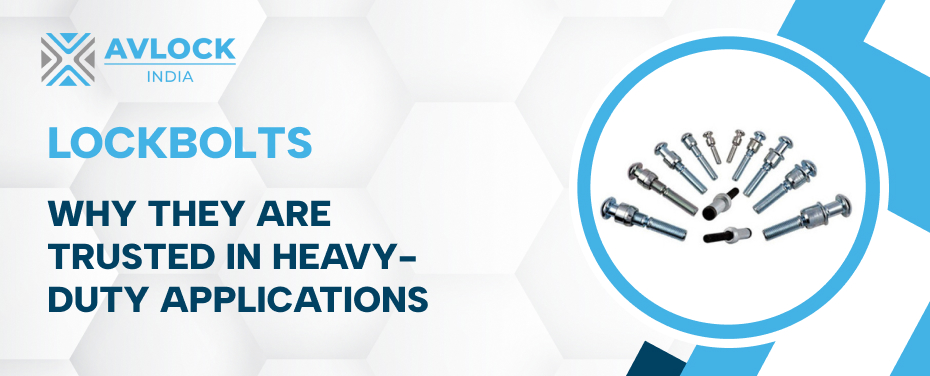
High-strength SFC fasteners are mechanically locked structural fastening systems designed for critical load-bearing applications. Unlike torque-dependent bolts, they form a permanent joint through controlled installation rather than friction.
Once installed, high-strength SFC fasteners:
This makes them ideal SFC fasteners for automotive applications, particularly in EV chassis assembly, where joint reliability is non-negotiable.
One of the most persistent challenges in EV chassis assembly is preload inconsistency. Torque-based fastening depends heavily on operator technique, surface finish, and lubrication.
High-strength SFC fasteners eliminate this variability. Their installation tools control clamp force directly, ensuring uniform joint performance across production lines.
This consistency improves build quality, reduces rework, and supports the future of EV chassis assembly at scale.
Lightweight materials such as aluminum alloys, high-strength steels, and mixed-material structures are essential for extending EV range. However, these materials are often more sensitive to joint movement and surface damage.
High-strength SFC fasteners distribute load evenly without relying on excessive torque. Their controlled installation protects softer substrates while maintaining structural strength.
This balance is critical to the future of EV chassis assembly, where efficiency and durability must coexist.
Electric vehicles experience continuous vibration, regenerative braking forces, and rapid torque reversals. These dynamic loads place sustained stress on chassis joints.
High-strength SFC fasteners are designed to withstand high-cycle fatigue environments. They resist joint relaxation and maintain clamp force throughout the vehicle's service life.
This durability is a key reason why high-strength SFC fasteners are defining the future of EV chassis assembly.
Crash performance depends on predictable load transfer through the chassis structure. Loose or inconsistent joints disrupt energy absorption paths and compromise safety.
High-strength SFC fasteners provide uniform joint behavior during impact, supporting controlled deformation and improved crash outcomes. For OEMs, this predictability aligns with increasingly stringent global vehicle safety regulations.
High-volume EV production demands speed, repeatability, and minimal inspection downtime. Traditional fasteners often require retorquing and frequent checks, slowing assembly lines.
High-strength SFC fasteners streamline installation by:
These productivity gains make them central to scalable EV manufacturing and the future of EV chassis assembly.
Fastener-related issues are costly once vehicles are in the field. Joint loosening can lead to noise, vibration, and harshness (NVH) problems, as well as structural degradation.
By adopting electric vehicle assembly fasteners such as high-strength SFC systems, manufacturers significantly reduce warranty claims and long-term service risks. Their permanent locking mechanism ensures joint integrity for the life of the vehicle.
The future of EV chassis assembly is automated and data-driven. Fastening solutions must integrate seamlessly with robotic systems and digital quality monitoring.
High-strength SFC fasteners are fully compatible with automated tooling. Installation parameters can be monitored and recorded, enabling traceability and Industry 4.0 compliance.
This capability supports smart factories and advanced quality assurance processes.
Modern EV platforms increasingly combine steel, aluminum, and composite materials. These mixed-material joints introduce challenges such as differential thermal expansion and galvanic interaction.
High-strength SFC fasteners accommodate these joints without relying on friction-based locking. Their design minimizes joint movement and material stress, supporting complex EV chassis architectures.
Sustainability is a core principle of EV development. Durable fastening solutions reduce waste, replacement frequency, and resource consumption.
High-strength SFC fasteners offer long service life and consistent performance. Fewer failures translate into fewer repairs and a lower environmental footprint, reinforcing their role in sustainable EV manufacturing.
The greatest benefits of SFC fasteners are realized when they are considered during the initial chassis design phase. Early integration improves joint geometry, load paths, and structural efficiency.
This approach reduces design iterations, accelerates validation, and enables faster time-to-market for new EV platforms.
EV manufacturers must comply with strict global safety and quality regulations. Structural joints are subject to rigorous testing and documentation requirements.
High-strength SFC fasteners provide repeatable installation results and documented performance data, simplifying compliance across markets and future-proofing vehicle designs.
The future of EV chassis assembly is not defined by batteries alone. Every structural decision, including fastener selection, shapes it.
High-strength SFC fasteners deliver the consistency, strength, and efficiency modern EV platforms require. They eliminate preload variability, enhance safety, and support automated, high-volume manufacturing.
Avlock International India Pvt. Ltd (Avlock India) supplies advanced SFC fastening solutions engineered for demanding automotive applications. For OEMs and suppliers building next-generation electric vehicles, high-strength SFC fasteners are not optional; they are the foundation of reliable, scalable, and future-ready EV chassis systems.
Email: marketing@avlock.co.in
Call: +91 22 25872300
WhatsApp: +91 91520 94678