×

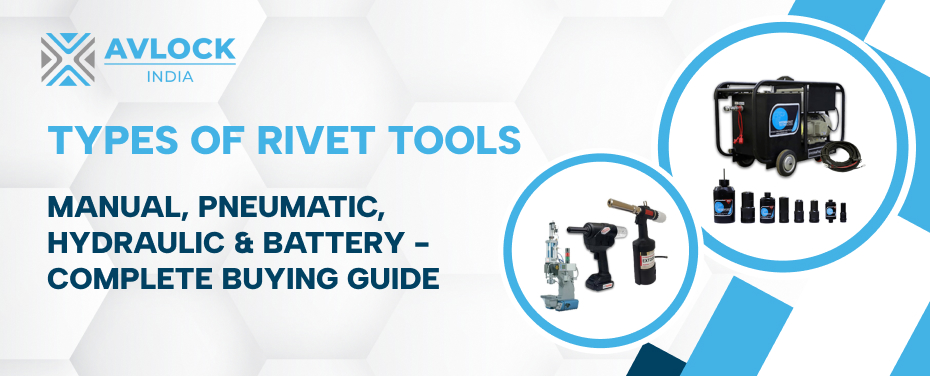
Types of Rivet Tools: Manual, Pneumatic, Hydraulic & Battery - Complete Buying Guide

Introduction

A blind rivet is only as reliable as the tool that sets it. Yet, rivet tool selection is frequently treated as an afterthought. Procurement teams buy the cheapest available option, operators use whatever is on the shelf, and nobody questions the process until quality problems appear on the production line.

In reality, the rivet tool is the heart of the fastening process. The right tool for the application determines installation consistency, operator fatigue levels, cycle time, and ultimately the reliability of every joint in your assembly.

This guide covers all types of rivet tools manual, pneumatic, hydraulic (hydro-pneumatic), and battery-operated, with a practical buying framework to match the right tool type to your application requirements.
 

1. Manual (Hand) Rivet Tools

How They Work

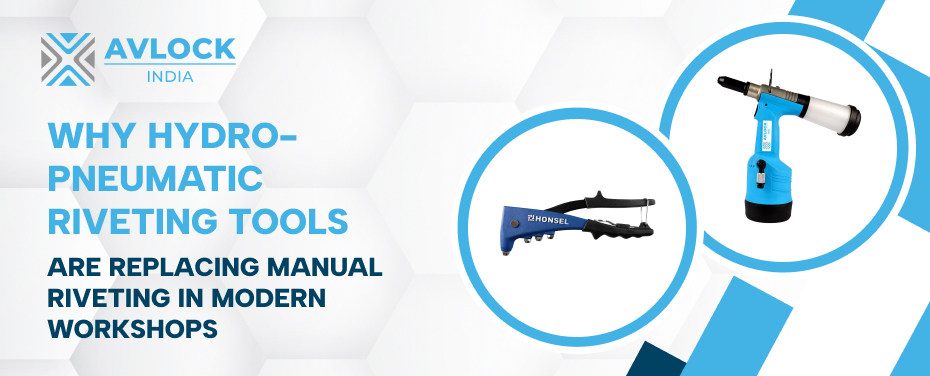
Manual rivet tools use a lever or ratchet mechanism that the operator actuates by hand to pull the rivet mandrel. They require no external power source, just hand effort and proper technique.

Best For

  • Low-volume assembly or maintenance tasks (fewer than 100 rivets per day)
  • Remote site or field service work where no power source is available
  • Small-diameter rivets (up to 4.8mm) in aluminium or light steel
  • Architectural and finishing work where tool size and access are limited

Limitations

  • Operator-dependent force inconsistent setting in high-volume production
  • Hand fatigue with extended use, especially for steel rivets or larger diameters
  • Not suitable for structural rivets requiring high mandrel pull force

Recommended for

Maintenance teams, field service crews, small fabrication shops, and architectural hardware installations.
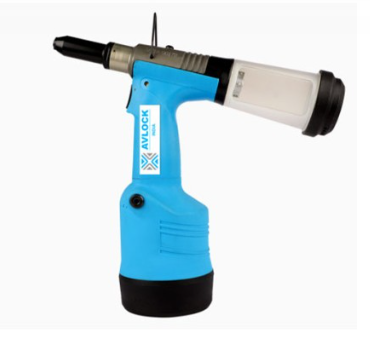
 

2. Pneumatic Rivet Tools

How They Work

Pneumatic rivet tools use compressed air to drive the mandrel pull mechanism. The operator simply positions the tool, places the rivet, and triggers the tool to do the work. Consistent air pressure translates to consistent installation force.

Best For

  • Medium to high-volume production lines (500–3,000+ rivets per day)
  • Assembly stations with fixed air supply infrastructure
  • Steel and stainless steel rivets where a higher pull force is needed
  • Repetitive production environments where operator fatigue reduction matters

Limitations

  • Requires compressed air supply, not suitable for remote or outdoor field work
  • Air hoses limit operator mobility on large assemblies
  • Air pressure must be regulated too high causes over-setting; too low causes incomplete setting

Recommended for

Bus body builders, automotive component manufacturers, switchgear panel assemblers, and any production line with >500 rivets/day.


3. Hydro-Pneumatic Rivet Tools

How They Work

Hydro-pneumatic tools combine an air input with an internal hydraulic intensifier to generate significantly higher mandrel pull force than standard pneumatic tools, typically 15,000 to 25,000 N or more. This makes them the tool of choice for structural blind rivets, lockbolts, and large-diameter fasteners.

Best For

  • Structural blind rivets (5.0mm and above) and lockbolts
  • High-volume heavy engineering assembly, railway wagon building, heavy commercial vehicles
  • Applications requiring consistent high-force settings across long production runs
  • Multi-grip and structural bulb rivets that require precise, high-force mandrel pull

Limitations

  • Higher capital cost than pneumatic tools
  • Heavier tool body ergonomic considerations for overhead or vertical installation
  • Requires both air supply and regular hydraulic fluid maintenance

Recommended for

Indian Railways wagon builders, heavy commercial vehicle manufacturers, mining equipment assemblers, and bus body builders use structural rivets or lockbolts.
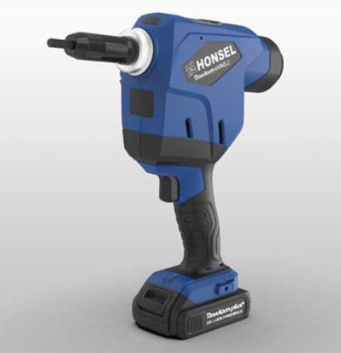
 

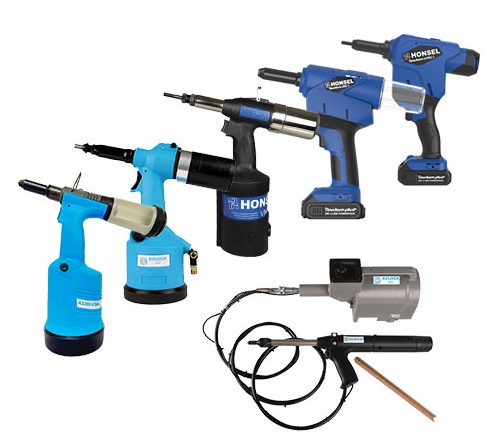
4. Battery-Operated (Cordless) Rivet Tools

How They Work

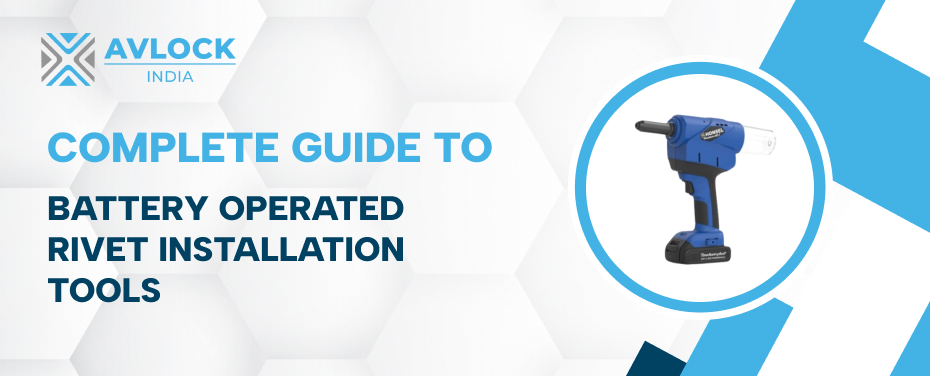
Battery-operated rivet tools contain an internal electric motor and gear-drive mechanism powered by a rechargeable lithium-ion battery. They offer the convenience of pneumatic tools without the compressed air infrastructure.

Best For

  • Field installation and on-site assembly away from workshop infrastructure
  • Solar panel and rooftop installation where air compressors are impractical
  • Construction sites, facade installation, and architectural work
  • Medium-volume production lines where mobility is valued over raw power

Limitations

  • Battery life limits sustained heavy production use, carry spare battery packs
  • Pull force lower than hydro-pneumatic tools is not suitable for large structural rivets
  • Higher initial cost than comparable pneumatic tools

Recommended for

Solar installation contractors, construction firms, maintenance teams, and any application requiring high mobility without sacrificing consistent installation quality.


Rivet Tool Buying Guide: How to Choose the Right Type

Use this framework when specifying or procuring rivet tools:

  • Volume: Under 200/day → manual. 200–2,000/day → pneumatic. 2,000+/day or structural rivets → hydro-pneumatic. Mobile/field → battery.
  • Rivet diameter and material: Up to 4.8mm aluminium → manual or pneumatic. 4.8–6.4mm steel → pneumatic or hydro-pneumatic. 6.4mm+ or structural/lockbolts → hydro-pneumatic only.
  • Power availability: Workshop with air supply → pneumatic or hydro-pneumatic. Site without air → battery. No power at all → manual.
  • Ergonomics: Overhead or awkward-angle installation → lightweight battery or ergonomic pneumatic. High-volume in-line production → inline hydro-pneumatic with suspension arm.
  • Budget: Consider the total cost of ownership of a ?8,000 pneumatic tool vs. a ?45,000 hydro-pneumatic tool, which is only the upfront comparison. Productivity, joint quality, and rework cost determine true ROI.

Rivet Tool Comparison Summary

Tool Type

Pull Force

Best Volume

Mobility

Best Rivet Types

Manual

Low

< 200/day

Excellent

Up to 4.8mm Al

Pneumatic

Medium

200–2000/day

Limited

Up to 6.4mm steel

Hydro-Pneumatic

Very High

2000+/day

Workshop

Structural/Lockbolts

Battery (Cordless)

Medium

200–1500/day

Excellent

Up to 5.0mm Al/steel


Key Takeaways

  • Match tool type to volume, rivet diameter, and power availability, not just budget.
  • Hydro-pneumatic tools are non-negotiable for structural blind rivets and lockbolts in heavy industry.
  • Battery tools have matured to professional-grade, ideal for site installation and solar projects.
  • Tool maintenance (nose piece condition, jaw replacement, pressure calibration) determines installation consistency as much as tool type.
  • Procure tools from the same supplier as your rivets, wherever possible, integrated technical support reduces specification errors.


FAQs

Q1: Which rivet tool is best for solar panel installation in India?

Battery-operated (cordless) rivet tools are the preferred choice for solar installations. They eliminate the need for air compressors at rooftop or ground-mount sites, provide consistent installation quality, and modern 18–21V Li-ion tools can set hundreds of rivets per charge.

Q2: Can I use a pneumatic tool for structural blind rivets?

Standard pneumatic rivet tools typically generate 8,000–12,000 N pull force, insufficient for structural blind rivets, which require 15,000–25,000 N. You need a hydro-pneumatic tool for structural rivets and lockbolts. Using an underpowered tool results in incomplete rivet setting and joint failure.

Q3: How often should rivet tool jaw inserts be replaced?

Jaw inserts are wear items. As a guideline, replace them every 5,000–10,000 cycles in production environments, or at the first sign of mandrel slippage, inconsistent break, or tool requiring more trigger effort than usual. Worn jaws are a leading cause of incorrect rivet setting.

Q4: Where can I buy industrial rivet tools in India?

Avlock India is a leading rivet tools supplier in India, offering manual, pneumatic, hydro-pneumatic, and battery-operated tools, including spare nose pieces, jaw sets, and maintenance support for all tool types they supply.

Looking for the right rivet tool for your production line or site? Avlock India supplies professional-grade manual, pneumatic, hydro-pneumatic, and battery rivet tools with full application support, nose piece compatibility guidance, and after-sales service across India.  

Visit avlock.co.in | Call: +91 22 6972 2300 | Email: info@avlock.co.in


  • Posted by: Avlock India
  • April 27, 2026

LEAVE A COMMENT

Similar Blog