Whatsapp
 Enquiry Now
Whatsapp Enquiry Now

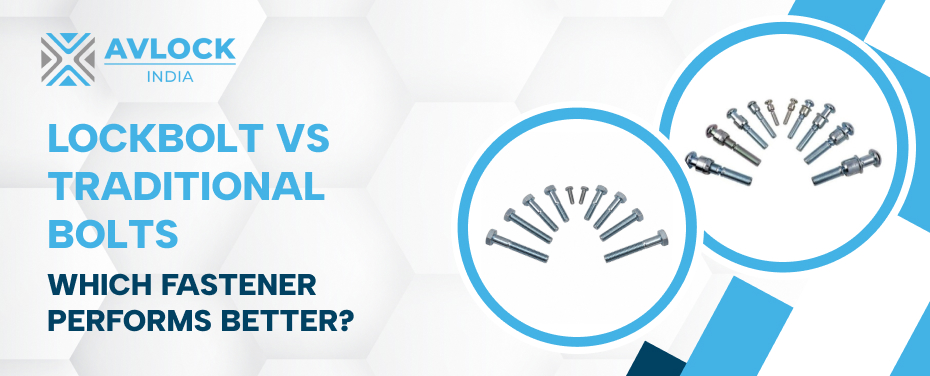
When it comes to industrial fastening, choosing between lockbolts and traditional bolts can significantly impact the performance, safety, and longevity of your assemblies. Engineers, procurement managers, and OEM manufacturers across India increasingly face this critical decision in sectors ranging from construction and transportation to heavy machinery and aerospace.
Lockbolts, sometimes called swaged fasteners or two-piece fastening systems offer a compelling alternative to conventional threaded bolts. But when is one better than the other? This comprehensive comparison breaks down the technical differences, performance metrics, installation requirements, and real-world applications to help you make an informed decision.
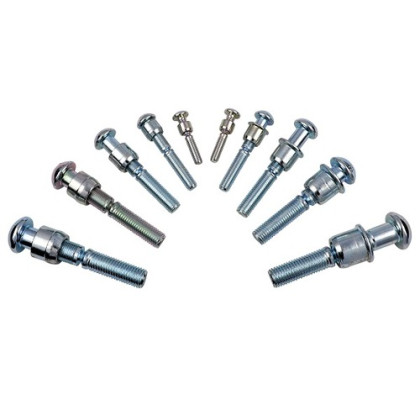
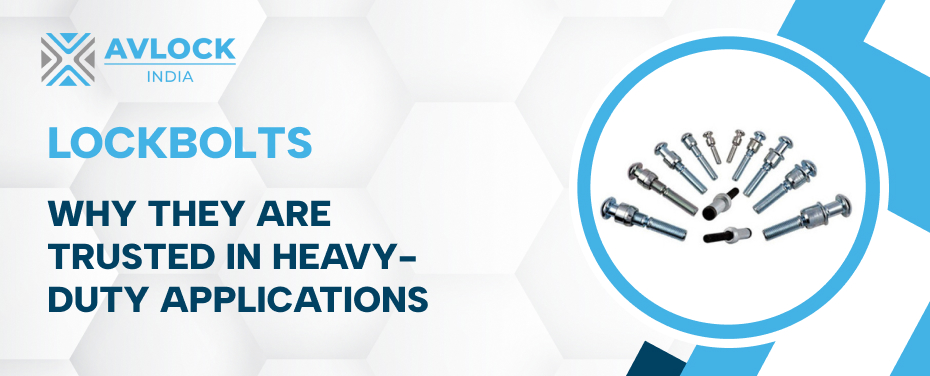
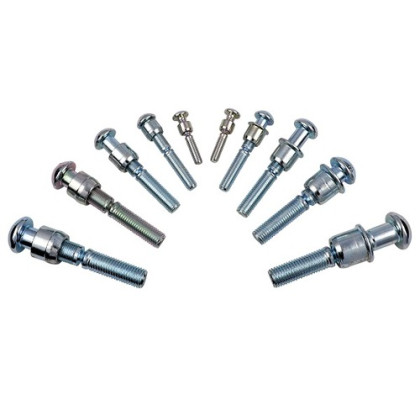
A lockbolt is a two-piece high-strength fastening system consisting of a pin (the bolt-like component) and a collar (the nut-like component). Unlike traditional bolts, lockbolts are installed using a dedicated installation tool that swages (cold-forms) the collar onto the pin's locking grooves, creating a permanent, tamper-resistant, and vibration-proof joint.
Key components of a lockbolt system:
• Pin: Manufactured from carbon steel, stainless steel, or aluminum alloy
• Collar: A soft metal sleeve that deforms during installation to lock onto the pin
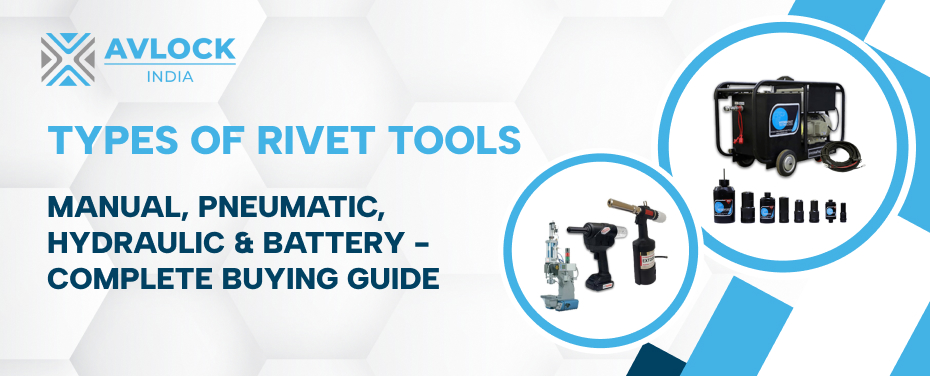
• Installation Tool: Pneumatic, hydraulic, or battery-operated tool for swaging
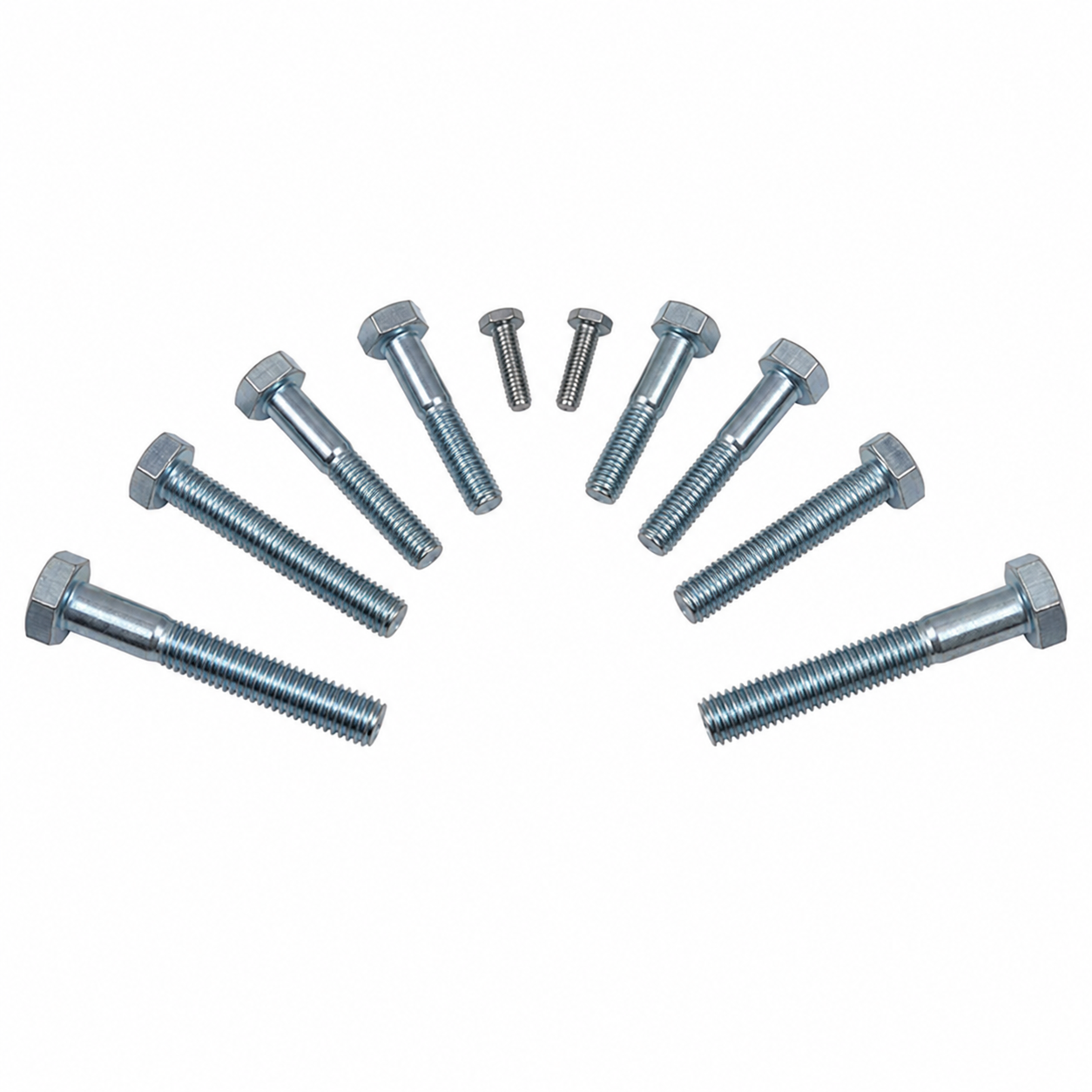
Traditional bolts are threaded fasteners installed with a matching nut and tightened using torque. They are available in various grades (4.6, 8.8, 10.9, 12.9) and are the most widely used mechanical fasteners globally. While extremely versatile, traditional bolts are susceptible to loosening under vibration and require periodic re-tightening in demanding environments.
|
Feature |
Lockbolt |
Traditional Bolt |
|
Installation Method |
Swaged collar (tool-driven) |
Torque tightening (wrench/spanner) |
|
Vibration Resistance |
Excellent, permanent joint |
Poor to moderate without locking aids |
|
Installation Speed |
50-70% faster |
Slower, torque verification needed |
|
Joint Consistency |
Highly consistent |
Varies with operator torque |
|
Disassembly |
Difficult (cut collar) |
Easy (unthread nut) |
|
Shear Strength |
Superior |
Good |
|
Tensile Strength |
Equal or superior |
Good |
|
Tamper Resistance |
High |
Low |
|
Re-tightening Required |
Never |
Periodically in vibration environments |
|
Cost Per Unit |
Slightly higher |
Lower |
|
Total Cost of Ownership |
Lower (reduced maintenance) |
Higher (ongoing maintenance) |
The swaged collar of a lockbolt creates a mechanical interlock that cannot loosen under vibration, a critical advantage in transportation, construction equipment, and heavy machinery where vibration-induced loosening is a constant challenge. Standard bolts, even with lock washers or thread-locking compounds, can gradually work loose under cyclic loading.
Lockbolt installation is operator-independent. The installation tool sets a precise clamp load by pulling the pin and swaging the collar, removing the variability of human torque application. A trained technician can install lockbolts up to 70% faster than torquing conventional bolts, significantly reducing assembly time on production lines.
Because the collar is swaged to a controlled geometry, every lockbolt achieves consistent clamp force within tight tolerances. This uniformity is essential in structural applications such as bridge construction, rail coach manufacturing, and crane fabrication, where joint integrity is non-negotiable.
Once installed, lockbolts cannot be removed without a cutting tool, making them ideal for security-sensitive applications such as public infrastructure, utility equipment, and government projects.
Despite the advantages of lockbolts, traditional bolts remain the appropriate choice in several scenarios:
• Frequent disassembly required (maintenance panels, inspection hatches)
• Low-vibration environments with static loads
• Budget-constrained projects with no installation tooling
• Applications requiring standard hardware available at any hardware store
• Temporary or adjustable assemblies
|
Industry |
Application |
Why Lockbolts? |
|
Rail & Transportation |
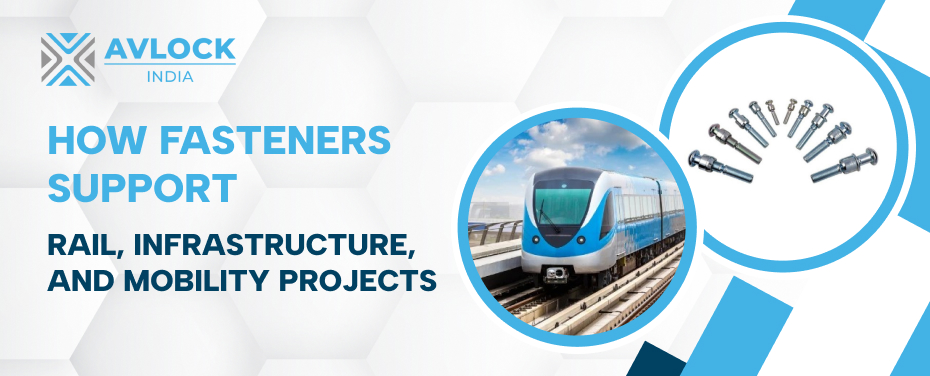
Bogies, coach bodies, locomotive frames |
Vibration resistance, permanent joint |
|
Construction & Infrastructure |
Steel bridges, structural steel connections |
High shear strength, tamper-proof |
|
Heavy Equipment |
Earthmoving machinery, cranes |
High fatigue resistance |
|
Automotive OEM |
Chassis, suspension components |
Speed of assembly, consistency |
|
Aerospace & Defense |
Airframe structures |
Weight-to-strength ratio, reliability |
|
Shipbuilding |
Hull sections, deck structures |
Corrosion-resistant options, strength |
While lockbolts carry a higher per-unit cost than traditional bolts, the total cost of ownership (TCO) tells a different story:
• Reduced labor costs: Faster installation means lower assembly time costs
• Zero re-tightening: Eliminates maintenance downtime and labor
• Fewer warranty claims: Consistent joint quality reduces field failures
• Longer service life: Permanent joints maintain integrity over product lifetime
For high-volume production environments and critical structural applications, lockbolts typically deliver a lower TCO over the life of the structure or product.
• The joint is permanent and disassembly is not required
• High vibration or dynamic loads are present
• Installation speed and consistency are priorities
• The application demands structural integrity over the long term
• Tamper resistance or security is a requirement
• Frequent maintenance or disassembly is necessary
• Budget constraints prohibit installation tooling
• The application involves low or static loads
• Standardized hardware is mandated by specification
1. Using traditional bolts in high-vibration environments without locking methods
2. Selecting lockbolts for assemblies that require regular maintenance access
3. Ignoring installation tool specifications, wrong tooling damages fasteners
4. Mixing lockbolt pin and collar materials incompatibly (e.g., steel pin with aluminum collar in corrosive environments)
5. Under-specifying grip range, always verify the material stack thickness matches the fastener grip length
Q: Can lockbolts be reused after removal?
A: No. Lockbolts are single-use permanent fasteners. Once the collar is swaged onto the pin, removal requires cutting or drilling out the collar. This is by design, it ensures joint integrity cannot be compromised by inadvertent loosening.
Q: Are lockbolts stronger than Grade 8 bolts?
A: Lockbolts are generally comparable to or stronger than Grade 8 (10.9 metric equivalent) bolts in shear strength. Their primary advantage is not raw strength but consistent clamp force and vibration resistance.
Q: What installation tools are required for lockbolts?
A: Lockbolts require a compatible swaging tool — typically pneumatic, hydraulic, or battery-operated. Avlock India supplies complete installation systems including tools, nosepieces, and accessories to match your specific lockbolt series.
Q: Do lockbolts require any surface treatment or lubrication?
A: Most lockbolts come with a factory-applied lubricant on the collar for smooth swaging. No additional lubrication is typically required. For corrosive environments, specify stainless steel or hot-dip galvanized versions.
Q: What is the grip range of a lockbolt?
A: Grip range refers to the total material thickness (stack) the fastener can clamp. Each lockbolt size has a defined minimum and maximum grip range. Using a fastener outside its grip range compromises joint integrity.
The lockbolt vs traditional bolts debate is ultimately a question of application requirements. For high-performance, permanent structural joints in vibration-intensive environments, lockbolts are the clear winner delivering faster installation, superior joint consistency, and zero maintenance requirements. Traditional bolts remain valuable where disassembly and standard hardware are priorities.
At Avlock India, we supply a comprehensive range of lockbolt fastening systems, including pins, collars, and dedicated installation tools, to meet the demanding requirements of Indian industry. Our technical team is ready to help you select the right fastening solution for your specific application.
Email: marketing@avlock.co.in
Call: +91 22 25872300
WhatsApp: +91 91520 94678