Whatsapp
 Enquiry Now
Whatsapp Enquiry Now

In any structural or mechanical assembly subjected to continuous vibration, dynamic loading, or extreme service conditions, one question must be answered before design sign-off: will the fasteners stay tight?
For applications in railways, heavy engineering, mining, bridges, and construction equipment, the answer to that question determines maintenance intervals, operational safety, and structural service life. It is precisely why lockbolts, a mechanically locked, vibration-proof fastening system, have become the fastener of choice in the world's most demanding applications.
This guide explains what lockbolts are, how they work, why they outperform conventional bolts in critical joints, and where they should be specified in the Indian industry.

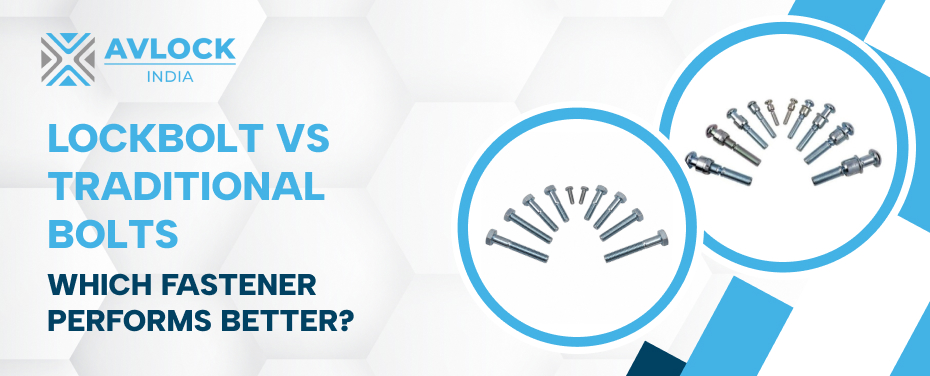
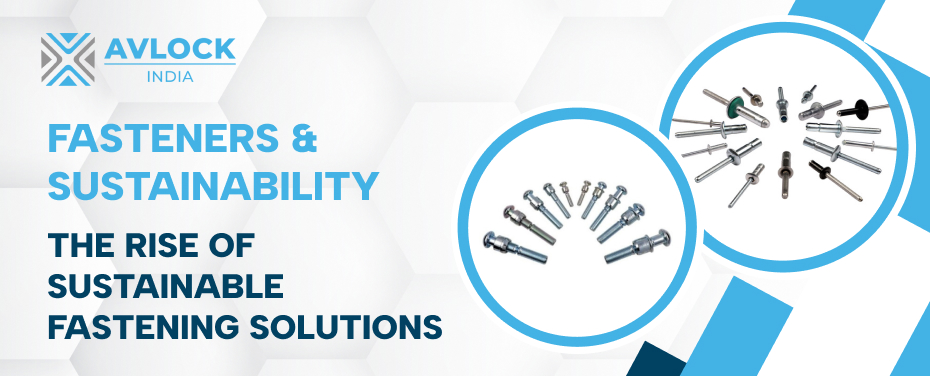
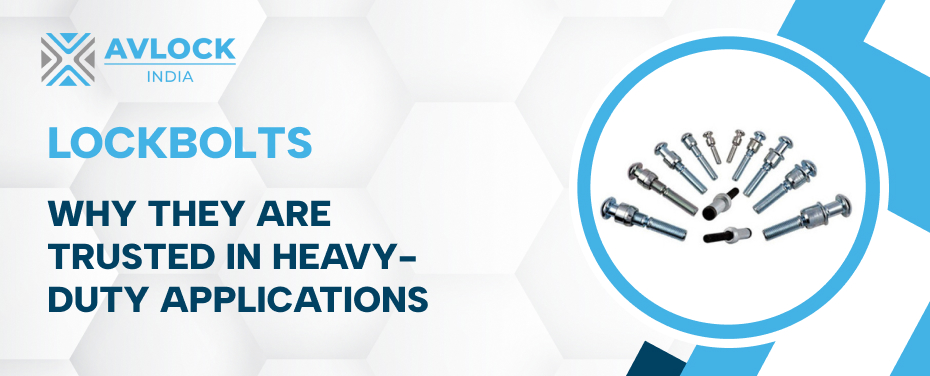
A lockbolt is a two-piece fastening system consisting of a pin (the bolt equivalent) and a collar (the nut equivalent). Unlike a conventional bolt-and-nut assembly, the collar is not threaded it is swaged (cold-formed) onto the annular grooves of the pin under controlled hydraulic or pneumatic installation force.
This swaging process creates a permanent mechanical interlock between pin and collar, a joint that cannot loosen due to vibration, shock loading, or thermal cycling. The installed clamp load is precisely determined by the installation process, ensuring every joint achieves the specified preload without relying on operator torque control or thread friction.

Step 1 - Hole Preparation: Parent materials are drilled to the specified clearance hole diameter, deburred, and aligned.
Step 2 - Pin Installation: The lockbolt pin is inserted through the prepared hole from the accessible face.
Step 3 - Collar Placement: The collar is placed over the protruding pin tail.
Step 4 - Tool Installation: A hydraulic or pneumatic pull-and-swage installation tool engages the pin tail and pulls it against the collar, drawing the joint into full contact and achieving the designed clamp load.
Step 5 - Collar Swaging: Continued tool force swages the collar into the pin's annular locking grooves, creating a permanent mechanical interlock.
Step 6 - Pintail Break: The installation tool breaks off the pin tail at the break groove, completing the installation. The joint is now fully locked at the designed clamp load.
|
Performance Factor |
Lockbolt System |
Conventional Bolt & Nut |
|
Clamp load consistency |
Precise, process-controlled |
Variable torque dependent |
|
Vibration resistance |
Permanent will not loosen |
Requires retorquing |
|
Installation speed |
Faster tool-controlled |
Slower torque wrenching |
|
Joint inspection |
Visual pintail removed = installed |
Requires torque verification |
|
Maintenance requirement |
Minimal joint is permanent |
Regular retorquing required |
|
Fatigue performance |
Excellent (consistent preload) |
Variable (preload loss over time) |
|
Installed cost |
Lower faster, no retorquing |
Higher total over asset life |
High-strength systems designed for primary structural joints in bridges, heavy frameworks, rail structures, and construction equipment. Typically installed in high-tensile steel or alloy structural sections with high clamp load requirements.
Aluminium-alloy or mixed-material lockbolts for lighter structural applications, such as aluminium frameworks, transport bodies, rail interior structures, and applications where weight is a factor alongside structural integrity.
Stainless steel or coated lockbolts for exposed environments, coastal infrastructure, marine applications, outdoor structures, and chemical processing facilities where corrosion would compromise joint integrity.
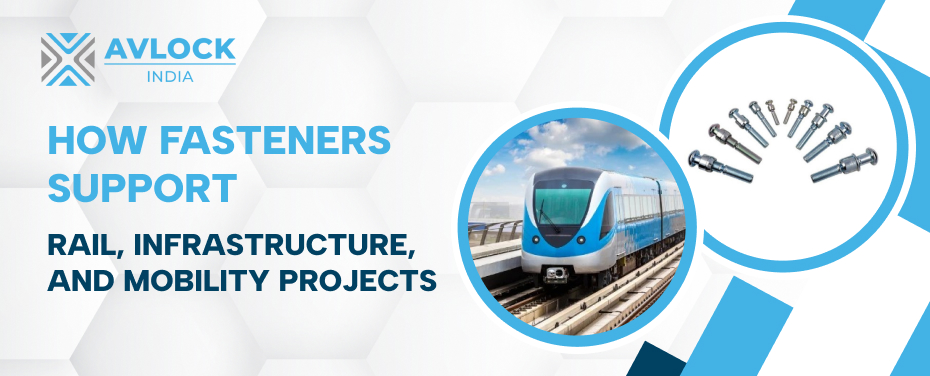
Railways are among the most demanding environments for fastened joints. Rolling stock operates under continuous vibration from wheel-rail interaction, variable thermal loading, and cyclic stress in bogie frames, body structures, and underframe assemblies.
In this environment, conventional bolt joints require scheduled retorquing, a maintenance-intensive process that increases operational downtime and introduces risk if missed. A loosened fastener in a bogie frame or body structure is a safety-critical failure mode.
Lockbolts are specified in railway applications precisely because they eliminate the retorquing requirement. Once installed, a lockbolt joint is mechanically locked at the designed clamp load and will remain so for the life of the assembly. This reduces maintenance intervention, improves safety assurance, and reduces lifecycle cost.
Typical railway lockbolt applications include bogie frames and bolster assemblies, rail coach body structures, underframe structural joints, wagon and freight car assemblies, and track maintenance equipment.
Heavy engineering crane structures, material handling equipment, industrial machinery, and fabricated steel frames subject joints to high static and dynamic loads, frequent operational cycling, and environmental exposure.
Lockbolts in construction applications deliver consistent, inspectable, maintenance-free joints. The visual inspection advantage is particularly valuable in large structures: a removed pintail is a confirmed installed fastener. This creates a simple, reliable quality verification method for large joint counts in complex fabrications.
In construction, particularly steel structure fabrication, bridge construction, and modular infrastructure, lockbolts offer speed advantages over conventional bolt tightening processes, reducing on-site labour time and eliminating re-inspection cycles.
Mining equipment, such as excavators, haul trucks, conveyors, crushing and screening machinery, operates in some of the harshest environments imaginable: extreme vibration, shock loading from impact operations, abrasive dust, and temperature extremes.
In these conditions, conventional bolt joints loosen rapidly and require intensive maintenance programs. Lockbolts in mining equipment deliver extended maintenance intervals, reduced unplanned downtime, and improved safety in environments where accessing fastened joints for retorquing is hazardous and time-consuming.
Selecting the right lockbolt for an application requires consideration of joint material thickness (grip length range), structural load requirement (pin diameter and grade), environmental conditions (material and coating choice), installation access (pin grip direction and collar placement), and installation tool availability (matched to pin type and diameter).
Application Engineering Note: Lockbolt systems are specified in conjunction with installation tools matched to the pin type and diameter. Avlock India's technical team can advise on system selection and tool specification for any application.
A high-tensile bolt achieves clamp load through controlled torque, which introduces variability and is subject to loosening under vibration. A lockbolt achieves a precise, controlled clamp load through the swaging process during installation, creating a permanent mechanical interlock that cannot loosen regardless of vibration or dynamic loading.
Lockbolts are designed as permanent fasteners. Removal requires drilling out the collar, which destroys the fastener. This is typically acceptable as lockbolts are used in permanent structural joints. In applications requiring disassembly, bolted connections or other removable fastening systems are more appropriate.
Lockbolts and equivalent mechanically locked fasteners are increasingly specified in Indian railway applications, particularly in rolling stock manufacturing and maintenance. Avlock India's technical team can advise on relevant specifications and application engineering for railway fastening requirements.
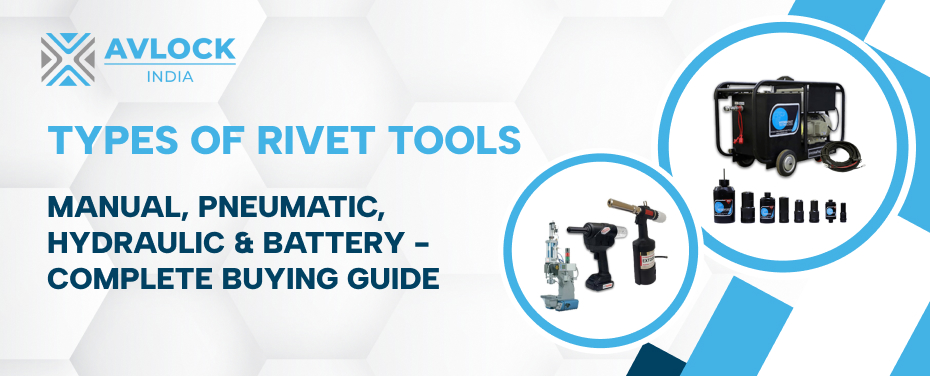
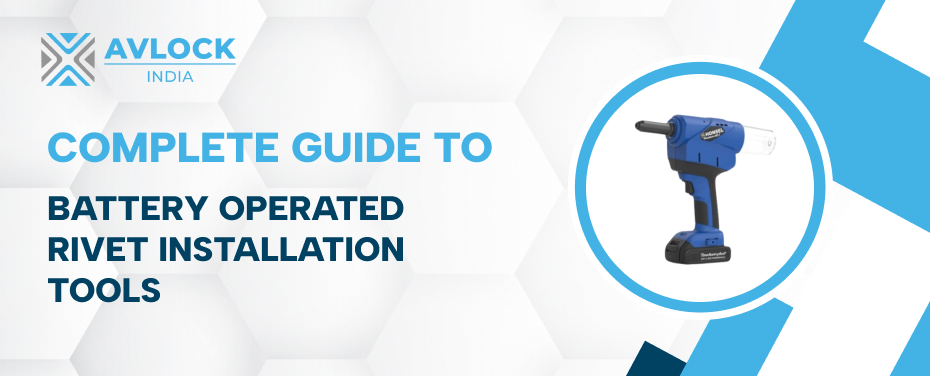
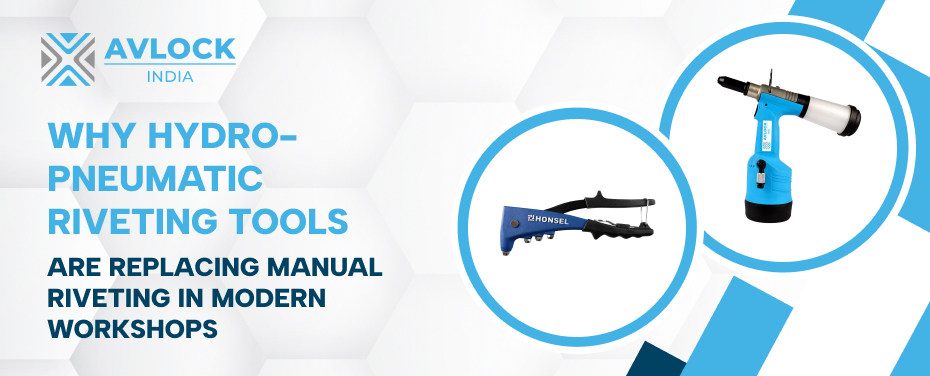
Lockbolts require a specific hydraulic or pneumatic pull-and-swage installation tool matched to the pin diameter and type. The correct tool is essential for achieving the specified collar swage geometry and clamp load. Avlock supplies matched installation tools for its lockbolt range.
Both are used in structural applications. HSFG bolts rely on controlled preload through precise torquing to develop friction-grip shear capacity. Lockbolts achieve controlled preload through the swaging process, are faster to install, and eliminate retorquing requirements. In high-vibration environments, lockbolts offer superior long-term performance.
Visit avlock.co.in | Call: +91 22 6972 2300 | Email: marketing@avlock.co.in