Whatsapp
 Enquiry Now
Whatsapp Enquiry Now


Solar tracker reliability depends on structural lockbolts more than many system designers initially realize. In utility-scale and commercial solar installations, trackers operate under constant motion and relentless environmental stress. Daily tracking cycles, high wind loads, and temperature fluctuations place extreme demands on every structural joint.
As solar assets are now expected to perform reliably for 25 years or more, fastener failure is no longer acceptable. This is precisely why solar tracker reliability depends on structural lockbolts rather than conventional fastening methods.
Unlike fixed-tilt systems, solar trackers are dynamic by design. Continuous rotation introduces cyclic loading across all structural connections.
Wind further amplifies these forces. Sudden gusts create vibration, uplift, and torsional stress throughout the tracker framework. Over time, these conditions weaken traditional fasteners and reduce joint integrity.
Solar tracker reliability depends on structural lockbolts, which are specifically engineered to withstand motion, vibration, and fatigue without losing clamp force.
Fastener loosening rarely leads to immediate structural failure. Instead, it causes gradual misalignment, reduced tracking accuracy, and uneven load distribution.
Across large solar farms, even minimal joint movement can propagate through multiple rows, increasing stress on:
Because of these cascading risks, solar tracker reliability depends on structural lockbolts that eliminate loosening at the source.
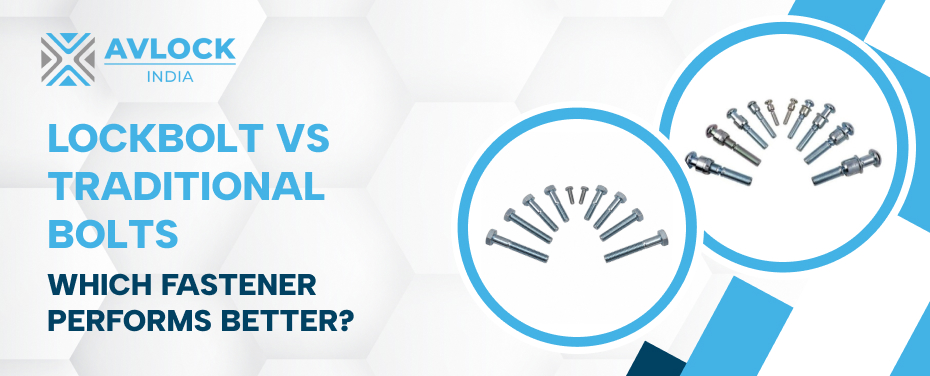
Standard nuts and bolts rely on friction generated by applied torque. In outdoor, high-vibration environments, this friction degrades over time.
These limitations explain why solar tracker reliability depends on structural lockbolts instead of traditional threaded fasteners.
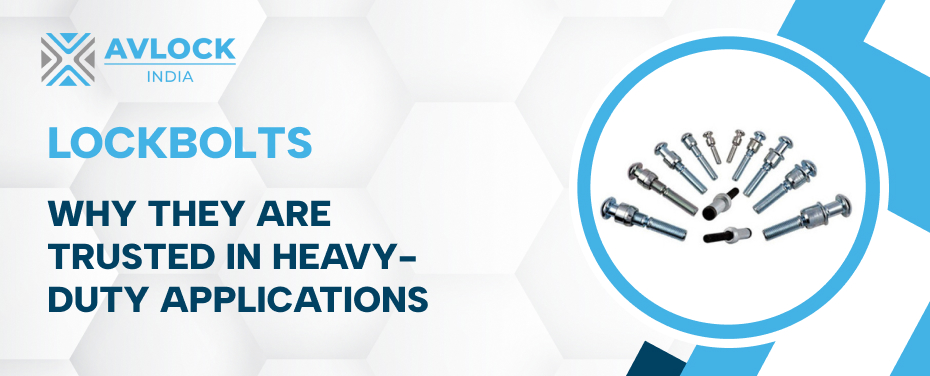
Structural lockbolts are mechanically locked fastening systems that create permanent, vibration-resistant joints. Their installation delivers controlled and consistent clamp force.
Once installed, the collar is mechanically swaged, preventing rotation and preload loss even under extreme operating conditions.
This mechanical locking principle is the fundamental reason solar tracker reliability depends on structural lockbolts in modern solar tracker designs.
Wind remains the primary structural threat to solar tracker systems. Gusts introduce unpredictable loads that test every connection point.
Structural lockbolts distribute these loads evenly across the joint and resist joint slip. They help maintain structural alignment during high-wind and storm events.
In regions with extreme weather, solar tracker reliability depends on structural lockbolts to maintain long-term structural stability.
Solar trackers are designed for decades of continuous operation. Over their lifespan, joints experience millions of load cycles.
Fatigue failure typically begins with micro-movement at fastener interfaces. Once movement starts, damage accelerates rapidly.
Structural lockbolts are engineered for high-cycle fatigue environments. Their endurance is a key reason solar tracker reliability depends on structural lockbolts throughout the entire asset lifecycle.
Utility-scale solar installations involve thousands of identical joints. Consistency during installation is critical to overall system reliability.
Torque-based fasteners vary with installer technique, tool calibration, and surface conditions, introducing unwanted variability.
Structural lockbolts use controlled installation tools that deliver repeatable, verified clamp force. This consistency further reinforces why solar tracker reliability depends on structural lockbolts.
Maintenance costs significantly influence project economics. Loose fasteners require frequent inspections, retightening, and corrective action.
Structural lockbolts eliminate the need for re-torque inspections. In many cases, visual inspection alone confirms joint integrity.
By reducing maintenance frequency and labor, solar tracker reliability depends on structural lockbolts to support lower operating costs and higher uptime.
Solar installations often operate in deserts, coastal regions, and high-humidity zones. Corrosion progressively weakens conventional fasteners.
Structural lockbolts are available with advanced coatings and corrosion-resistant materials that protect clamp force and joint performance.
Environmental durability further explains why solar tracker reliability depends on the use of structural lockbolts across diverse geographies.
Precise alignment is essential for maximum energy generation. Even small deviations from optimal tracking angles reduce long-term output.
Loose fasteners allow structural drift, compromising tracker accuracy and overall system efficiency.
Structural lockbolts maintain alignment across the structure. As a result, solar tracker reliability depends on structural lockbolts to protect energy yield and return on investment.
Speed is critical during large solar deployments, but never at the expense of safety or quality.
Structural lockbolts simplify installation by reducing steps and eliminating complex torque procedures. This improves productivity while maintaining joint integrity.
Faster, safer installation is another reason solar tracker reliability depends on structural lockbolts in modern solar projects.
Solar developers operate across regions with varying site conditions and labor skill levels. Standardized fastening systems simplify training and quality control.
Structural lockbolts deliver predictable performance regardless of location. This consistency supports global scalability and uniform safety standards.
In multinational projects, solar tracker reliability depends on structural lockbolts to achieve consistent quality worldwide.
Fasteners represent a small fraction of total system cost, but failures carry significant financial consequences.
Downtime, repair work, and lost energy generation quickly outweigh initial savings from lower-cost fasteners.
From a lifecycle cost perspective, solar tracker reliability depends on structural lockbolts to ensure long-term financial stability.
The highest performance gains occur when fasteners are integrated during the design phase. Joint geometry and load paths can be optimized specifically for lockbolt systems.
Design-stage integration improves reliability and minimizes future retrofits, reflecting why solar tracker reliability depends on structural lockbolts as a core structural element.
Solar tracker reliability depends on structural lockbolts because they directly address the real-world challenges of dynamic loading, harsh environments, and long service life. Traditional fasteners cannot deliver the consistency modern solar infrastructure demands.
By choosing advanced solar structure fastening solutions, developers protect alignment, reduce maintenance, and ensure predictable performance for decades.
Avlock International India Pvt. Ltd (Avlock India) provides high-performance structural fasteners for solar energy projects, engineered for vibration resistance, fatigue endurance, and long-term durability. For developers and EPCs securing future-ready solar assets, structural lockbolts are not an upgrade; they are a necessity.
Email: marketing@avlock.co.in
Call: +91 22 25872300
WhatsApp: +91 91520 94678