Whatsapp
 Enquiry Now
Whatsapp Enquiry Now

The evolution of industrial fastening tools has been dramatic over the past decade. Battery-operated rivet installation tools have emerged as one of the most significant advancements in assembly technology, offering the portability of manual tools with the power and consistency of pneumatic systems, without the limitations of air compressors and hose management.
For manufacturers, fabricators, contractors, and field service engineers across India, battery-operated rivet tools represent a step-change in productivity, operator ergonomics, and installation consistency. This comprehensive guide covers everything you need to know about selecting, using, and maintaining battery-powered rivet installation tools.
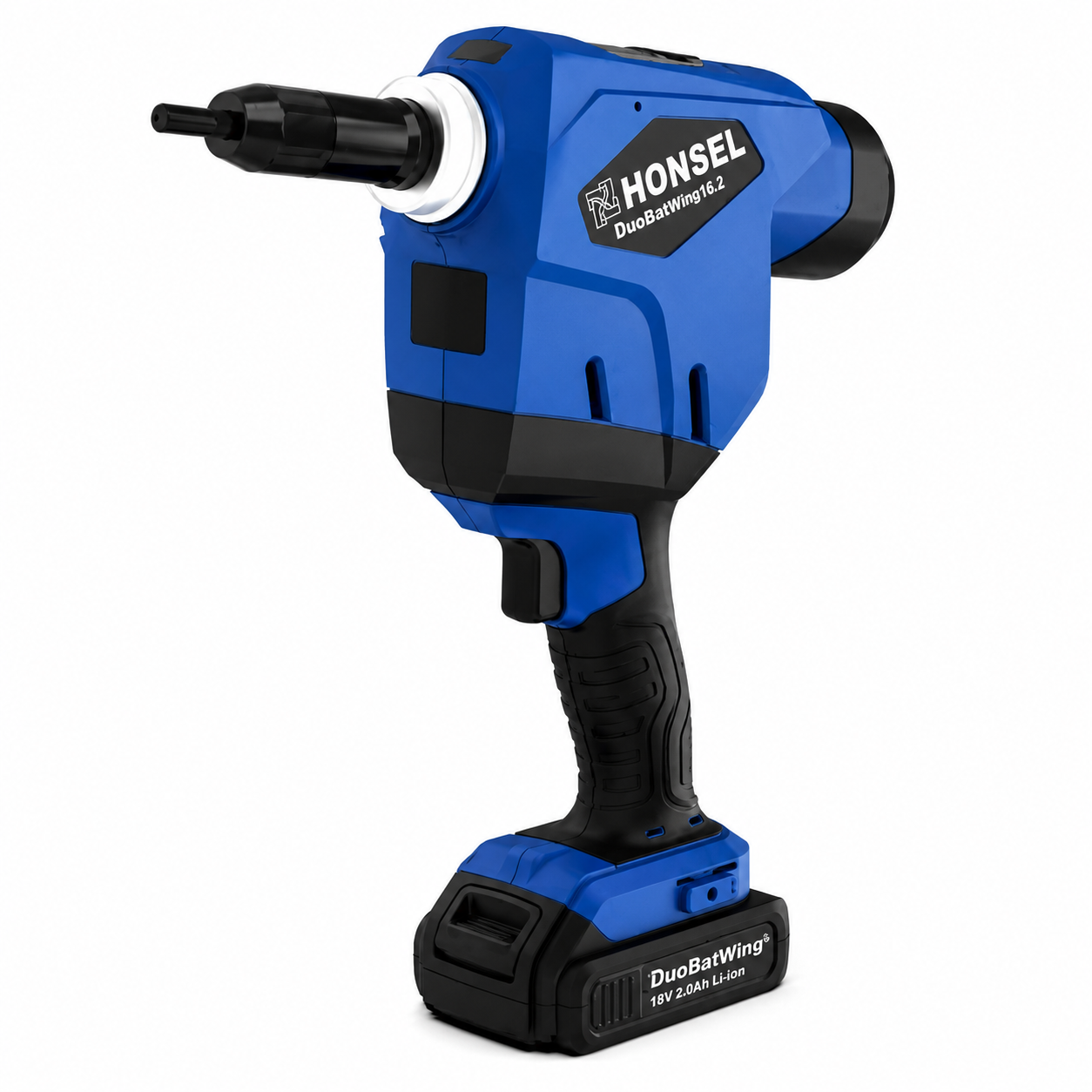
Battery-operated rivet installation tools use an electric motor powered by a rechargeable lithium-ion battery to drive a hydraulic or mechanical pulling mechanism. When the trigger is activated:
1. The motor drives a hydraulic pump or ball-screw mechanism
2. The pulling head grips the rivet mandrel
3. The mechanism pulls the mandrel with the programmed force
4. The rivet sets and the mandrel breaks at the designed break load
5. The mandrel stem is collected in an internal waste container
6. The tool automatically resets for the next rivet
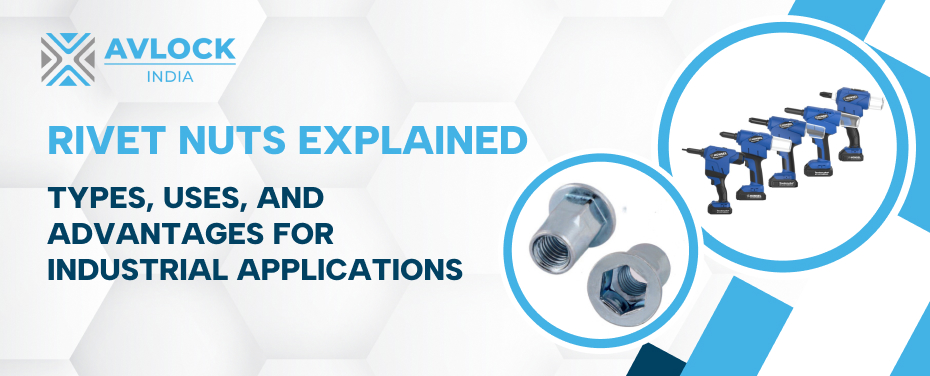
Designed for standard and structural blind rivets. The most common type for general industrial and construction use. Available in 12V, 18V, and 20V variants with pull forces from 10 kN to 25 kN+.
Specifically engineered to install rivet nuts (threaded inserts) into thin-section materials. The tool threads onto the rivet nut and pulls to form the blind-side clinch, then releases automatically.
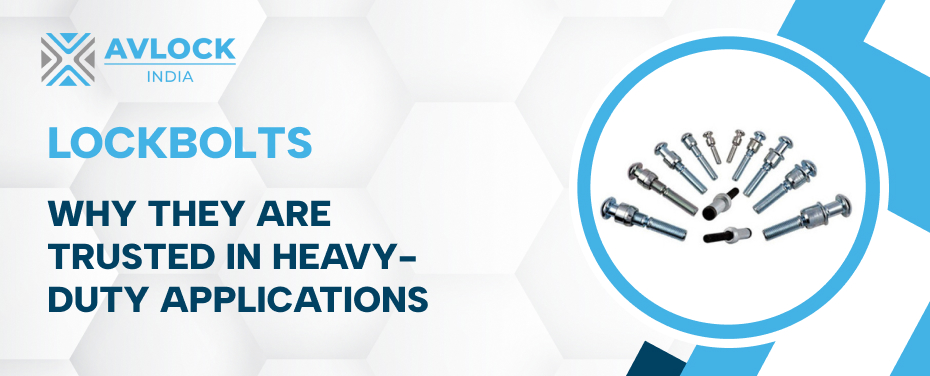
High-force tools designed to swage lockbolt collars. Typically available at 18V-36V with hydraulic assist for the high swaging forces required. Used in structural applications where pneumatic tools are impractical.
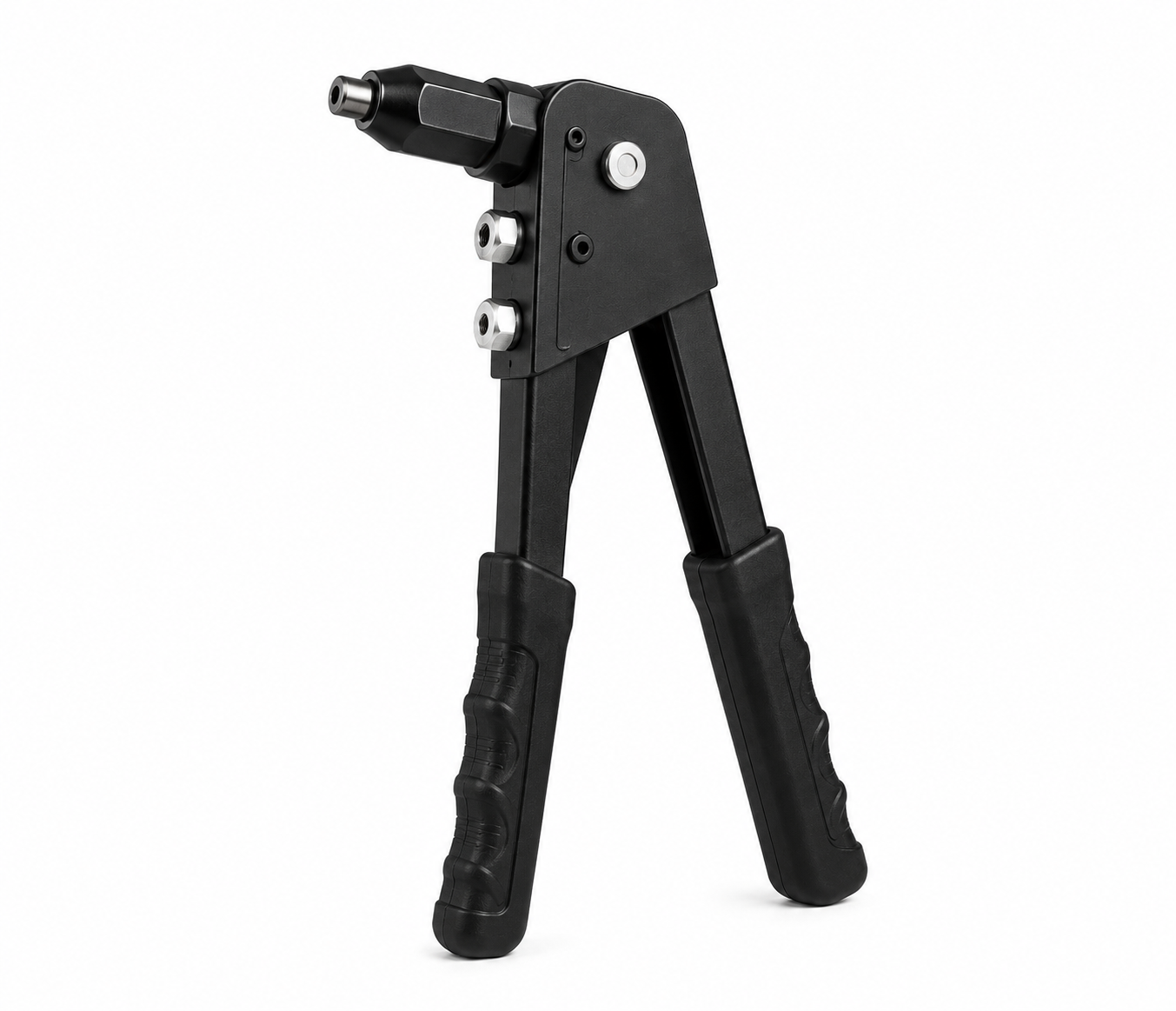
|
Feature |
Battery Rivet Tool |
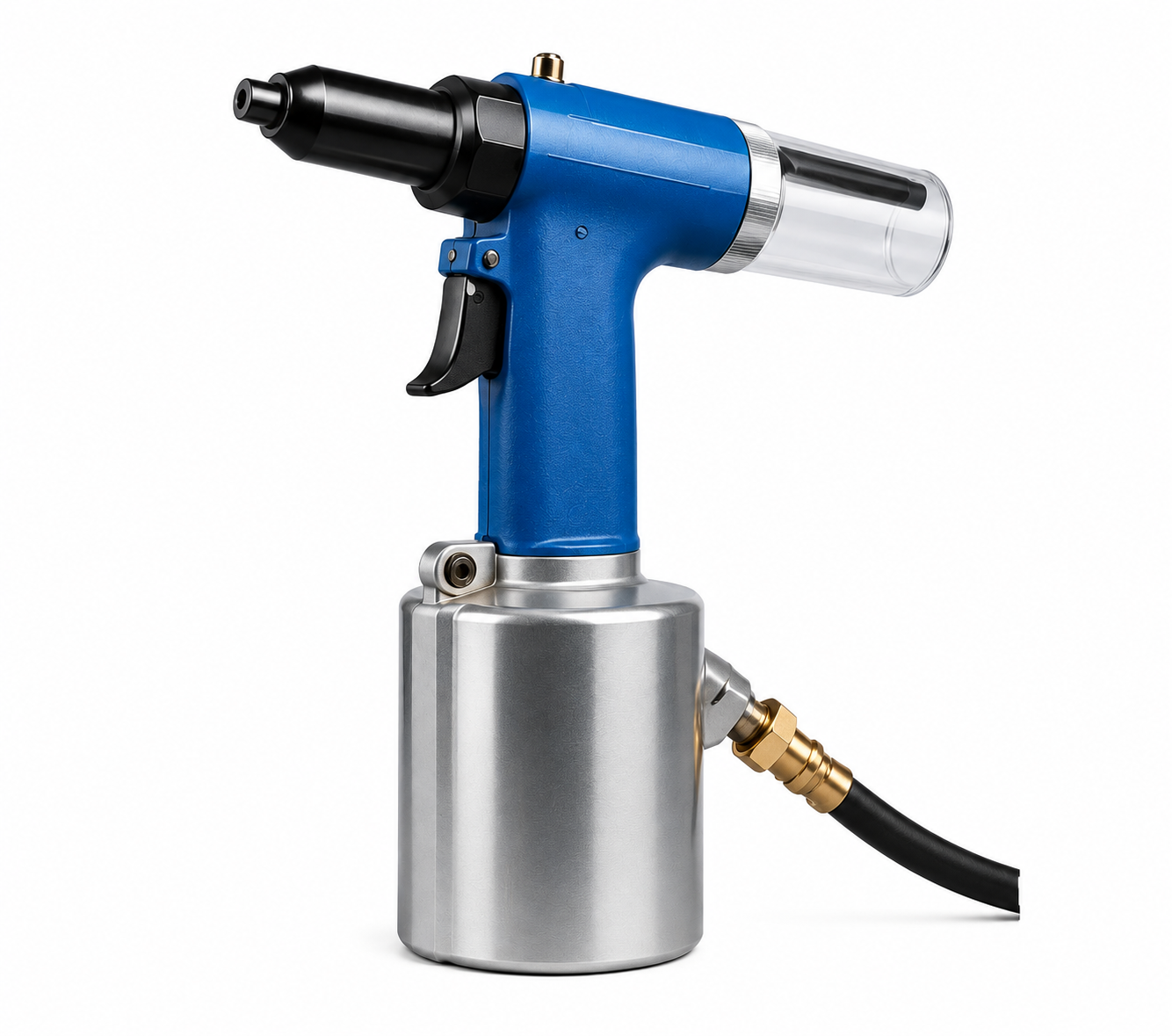
Pneumatic Rivet Tool |
Manual Rivet Tool |
|
Power Source |
Rechargeable Li-ion battery |
Compressed air |
Operator hand force |
|
Portability |
Excellent, fully cordless |
Limited, air hose required |
Excellent |
|
Installation Speed |
Fast, auto-return stroke |
Very fast |
Slow |
|
Operator Fatigue |
Low, trigger operation |
Low, trigger operation |
High, repetitive strain |
|
Consistency |
High, controlled pull force |
High |
Low, operator dependent |
|
Remote/Field Use |
Ideal |
Difficult |
Suitable |
|
Compressor Required |
No |
Yes |
No |
|
Maintenance |
Low |
Moderate |
Low |
|
Initial Cost |
Medium-High |
Medium |
Low |
|
Rivet Size Range |
Up to 6.4 mm typically |
Up to 8 mm+ |
Up to 4.8 mm typically |
|
Best For |
Field, mobile, medium-high volume |
Fixed workstation, high volume |
Low volume, occasional use |
The pull force (measured in kN or kgf) determines the maximum rivet diameter and body material the tool can install. For standard aluminium rivets up to 4.8 mm, 12-15 kN is sufficient. For steel structural rivets up to 6.4 mm, select tools rated at 18-25 kN minimum.
If your workshop or field team already uses tools from a major cordless tool platform (such as 18V or 20V battery systems), selecting rivet tools that share the same battery platform reduces overall battery and charger investment.
An efficient internal mandrel waste collection system is essential for clean operation. Evaluate capacity (how many mandrels before emptying) and ease of emptying without tools.
A quality battery rivet tool should accept interchangeable nose pieces to handle multiple rivet diameters (typically 2.4 mm, 3.2 mm, 4.0 mm, 4.8 mm, 6.4 mm) without purchasing separate tools.
For high-volume use or overhead applications, tool weight and balance are critical. Quality battery rivet tools weigh between 1.8 kg and 3.5 kg. Rubber-grip handles and balanced weight distribution reduce cumulative operator fatigue.
• Complete portability, no air lines, no compressor logistics
• One-handed operation in confined spaces
• Consistent installation force operator-independent quality
• Reduced repetitive strain injury risk versus manual tools
• Automatic nose returns faster cycle times than manual tools
• Safe for indoor use, no compressed air, noise or oil mist
• Ideal for rooftop, scaffolding, and remote site work
• Compatible with a wide range of rivet types, including structural grades
|
Application Sector |
Use Case |
Tool Advantage |
|
Construction |
Roofing, cladding, structural steel assembly on-site |
Portability, no compressor on scaffold |
|
Commercial Vehicles |
Body panel assembly, repair workshops |
Speed, consistency, operator comfort |
|
Solar Installation |
Panel frame assembly on rooftops |
Cordless operation at height |
|
Rail Maintenance |
Field repair and maintenance of coaches |
Remote use without power infrastructure |
|
Electrical Enclosures |
Panel building, enclosure assembly |
Clean, no oil mist from air tools |
|
HVAC & Ducting |
Duct assembly and installation |
One-handed in tight spaces |
|
Shipbuilding & Offshore |
Remote areas of vessels |
No compressed air distribution required |
7. Clean the nose piece after each work session to remove aluminium oxide or steel debris
8. Empty the mandrel collection chamber regularly to prevent jamming
9. Inspect the jaw mechanism monthly, and replace worn jaws promptly
10. Store batteries at 40-60% charge in a cool, dry environment for extended storage
11. Lubricate the pull mechanism per the manufacturer's schedule (typically every 50,000 cycles)
12. Use only manufacturer-specified replacement parts to maintain tool performance and safety
• Rivet size range: Match to your most common rivet diameters
• Pull force: Ensure it covers your heaviest rivet specification
• Battery platform: Prefer compatibility with existing tool batteries
• Tool weight: Consider overhead and prolonged use ergonomics
• Warranty and service support: Select suppliers with local service capability in India
• Tooling (nose pieces): Confirm availability of all required nose piece sizes
13. Selecting underpowered tools, insufficient pull force causes incomplete rivet setting
14. Ignoring nose piece maintenance, worn jaws cause mandrel slippage and poor installation
15. Using incorrect battery voltage, always match tool specification
16. Neglecting mandrel collection, full waste chamber causes tool jamming
17. Buying tools without local service support in India, critical for minimizing downtime
Conclusion
Battery-operated rivet installation tools have fundamentally changed the economics and ergonomics of industrial fastening. By eliminating the compressed air dependency, reducing operator fatigue, and delivering consistent installation quality across diverse environments, these tools are a sound investment for any assembly operation that relies on blind riveting.
Avlock India supplies a comprehensive range of battery-operated rivet installation tools, matched nosepieces, replacement parts, and after-sales service across India. Whether you need tools for field maintenance operations or production line integration, our team can help you select and configure the optimal solution.
Q: How many rivets can a battery rivet tool install per charge?
A: This varies by tool, battery capacity, and rivet size/material. Typically, an 18V 3.0 Ah battery can install between 300 and 1,500 standard aluminium blind rivets per charge. Steel structural rivets require more power, reducing this count. Always have a spare battery for uninterrupted production.
Q: Can battery rivet tools install structural and lockbolt fasteners?
A: Standard battery blind rivet tools handle structural blind rivets up to about 6.4 mm. For lockbolt installation, purpose-designed battery-powered swaging tools with higher force output are required. Avlock India supplies both types.
Q: Are battery rivet tools suitable for high-volume production lines?
A: Yes, for medium-to-high volume applications. For very high-volume fixed workstations, pneumatic tools may still offer faster cycle times. Battery tools excel where portability is required or compressed air infrastructure is unavailable.
Q: What rivet diameters can battery tools handle?
A: Most battery rivet tools handle 2.4 mm, 3.2 mm, 4.0 mm, 4.8 mm, and 6.4 mm diameter rivets with interchangeable nose pieces. Some heavy-duty models extend to 8.0 mm for structural applications.
Email: marketing@avlock.co.in
Call: +91 22 25872300
WhatsApp: +91 91520 94678