Whatsapp
 Enquiry Now
Whatsapp Enquiry Now

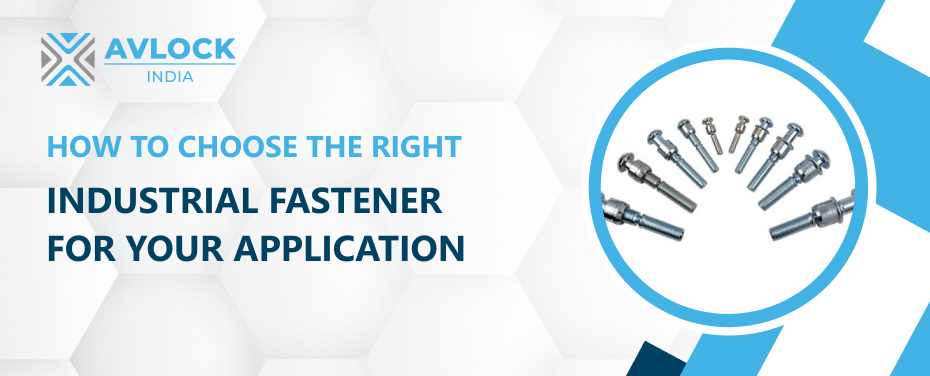
Selecting the wrong industrial fastener can result in product failure, safety risks, downtime, and increased long-term costs. You may have strong materials and precise designs, but performance still depends on fastening reliability. That is why learning how to choose the right industrial fastener is critical across industries such as Automotive OEM, EV manufacturing, Railways, Solar, Mining, and Metro Coaches.
This guide explains how to choose the right industrial fastener based on application needs, environment, materials, and industry standards. You will learn how industrial fasteners function, how Blind Rivets differ from other options, and how to make informed decisions backed by engineering logic and industry practice.
When you evaluate industrial fasteners, you must balance strength, durability, cost, and compliance. There is no universal solution. The correct choice depends on how, where, and why the fastener is used.
Answering these questions simplifies how to choose the right industrial fastener for your application.
Industrial fasteners are mechanical components used to join, hold, or secure parts together. They include rivets, bolts, screws, nuts, and specialty fastening systems.
In industries such as Automotive EV OEM or Railway manufacturing, fastener failure can result in severe safety and compliance issues.
These include bolts, screws, nuts, washers, and pins. They allow disassembly but may loosen under vibration.
Rivets and Blind Rivets fall into this category. They provide consistent clamping force and resist loosening.
These include leakproof rivets, trifold rivets, and structural fasteners designed for specific applications.
Understanding categories helps you decide how to choose the right industrial fastener without overengineering or underperforming.
A Blind Rivet is one of the most widely used industrial fasteners, especially when access is available from only one side.
A Blind Rivet consists of a rivet body and a mandrel. When installed, the mandrel pulls and expands the body, creating a secure joint.
Blind Rivets are common in Automotive OEM, Bus Body Builders, White Goods, Electrical panels, and Solar structures.
Material selection is a core factor when deciding how to choose the right industrial fastener.
For example, aluminium Blind Rivets work well in White Goods, while stainless steel fasteners suit Railway and Metro Coaches.
Each load type affects how to choose the right industrial fastener differently.
In Mining, Railway, and Solar installations, structural Blind Rivets and heavy-duty industrial fasteners are preferred due to high load demands.
If your application faces moisture, chemicals, or salt exposure, corrosion resistance becomes critical.
Solar and outdoor applications require industrial fasteners that perform under extreme heat and UV exposure.
Ignoring environmental factors is one of the most common mistakes in choosing the right industrial fastener.
Industries like Automotive OEM, EV manufacturing, and Metro Coaches face constant vibration.
Blind Rivets outperform threaded fasteners in vibration-heavy environments because they do not loosen over time.
You need lightweight, high-strength industrial fasteners with vibration resistance. Blind Rivets are widely used for body panels and battery enclosures.
Fasteners must handle structural loads and frequent vibration. Structural Blind Rivets provide long-term durability.
Precision, aesthetics, and speed matter. Blind Rivets allow clean finishes and fast production cycles.
Fasteners must endure extreme loads, dust, and corrosion. Heavy-duty industrial fasteners with protective coatings are essential.
Safety compliance is critical. Fasteners must meet fire, vibration, and fatigue standards. High-performance Blind Rivets are often preferred.
Exposure to weather and thermal cycles demands corrosion-resistant industrial fasteners that maintain clamping force.
Understanding industry context is essential when deciding how to choose the right industrial fastener.
Your production scale affects fastener selection.
Assembly efficiency is often overlooked but plays a major role in choosing the right industrial fastener.
Industrial fasteners must comply with international and industry standards.
Choosing certified fasteners reduces risk and supports long-term performance.
Low-cost industrial fasteners often fail prematurely, increasing total ownership cost.
When evaluating how to choose the right industrial fastener, consider:
Blind Rivets often provide better lifecycle value due to durability and reduced rework.
Avoiding these errors strengthens your understanding of how to choose the right industrial fastener correctly.
Avlock International India Pvt. Ltd specializes in high-performance industrial fasteners designed for demanding applications.
Working with an experienced manufacturer helps you implement how to choose the right industrial fastener with confidence.
Choosing the correct industrial fastener is not a guesswork exercise. It requires understanding materials, loads, environments, and industry requirements. When you follow a structured approach, choosing the right industrial fastener becomes clear and repeatable.
Blind Rivets continue to play a vital role in modern manufacturing due to their strength, speed, and reliability. By aligning application needs with the right fastener type, you reduce risk, improve performance, and extend product life.
Email: marketing@avlock.co.in
Call: +91 22 25872300
WhatsApp: +91 +91 91520 94678