Whatsapp
 Enquiry Now
Whatsapp Enquiry Now

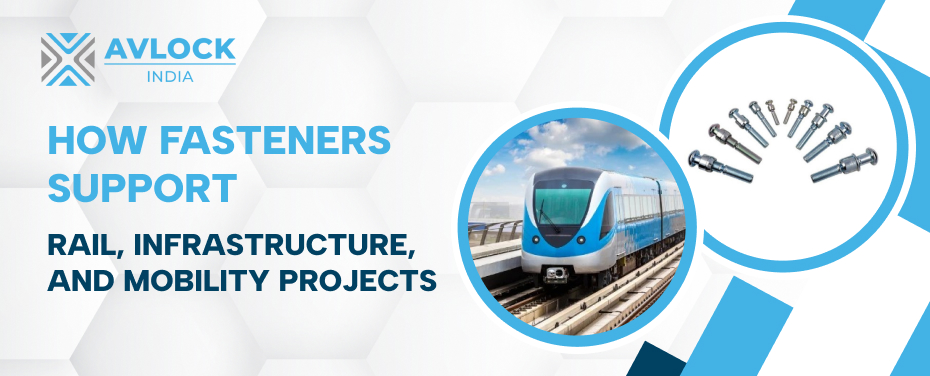
India is in the midst of an infrastructure transformation. The National Rail Plan, metro expansions in over 25 cities, dedicated freight corridors, highway and bridge construction, and the rapid growth of electric mobility are collectively creating one of the largest structural fastening markets in Asia.
Behind every metre of track, every bogie frame, every coach panel, and every bridge joint lies an array of fastened connections that must perform reliably under extraordinary conditions: vibration, dynamic loading, environmental exposure, and design service lives measured in decades.
This article examines how speciality fasteners and engineered fastening systems for India's rail, infrastructure, and mobility projects, and what engineers and procurement teams need to know when specifying fastening solutions for these demanding applications.

Railway and infrastructure applications impose some of the harshest conditions on fastened joints. Rolling stock assemblies experience continuous vibration from wheel-rail interaction, cyclic stress in structural members, and temperature swings from operational heating to ambient overnight. Bridge and infrastructure joints carry variable live loads, wind loads, and seismic forces alongside long-term static dead loads.
In these conditions, conventional bolt-and-nut connections are vulnerable. Thread friction, the mechanism that keeps a standard bolt tight, degrades under vibration. A standard bolt joint that loses even 10% of its preload may enter a micro-slip cycle that accelerates loosening further, ultimately resulting in joint failure or requiring premature maintenance intervention.
Engineered fastening solutions, specifically lockbolts, structural blind fasteners, and tension-controlled systems, address this challenge through mechanical locking mechanisms that maintain clamp load independently of thread friction.

Modern railway rolling stock, including electric multiple units, metro coaches, high-speed trains, and freight wagons, is manufactured with complex multi-material structures combining high-strength steel, aluminium extrusions, and composite panels. Each of these material combinations presents unique fastening challenges.
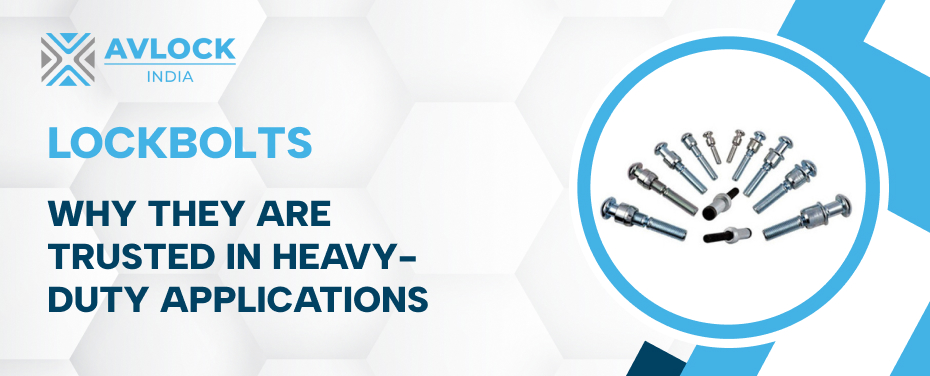
Bogie frames carry the entire vertical and lateral loads of the vehicle and transmit them to the wheel axle sets. Fastened joints in bogie assemblies must maintain full preload under continuous high-frequency vibration. Lockbolts are the industry standard for primary bogie structural joints precisely because they deliver permanent, vibration-proof mechanical interlock.
Rail coach bodies are fabricated from aluminium extrusions, high-strength steel, and composite panels, often in combinations that preclude welding. Blind rivets and structural blind fasteners provide fast, reliable joining with one-sided installation access, essential in coach body assembly where internal access is restricted.
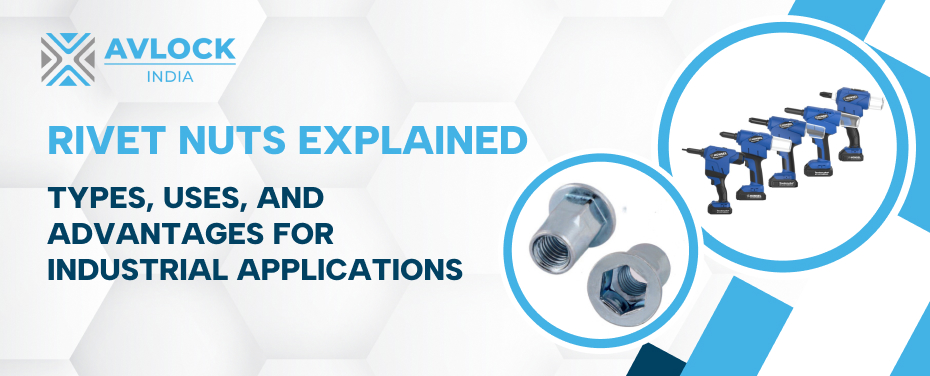
Interior fittings, seat mounting, panel fixings, overhead luggage rack attachment, and grab rail brackets use rivet nuts extensively. One-sided installation, reusability for maintenance access, and clean cosmetic appearance make rivet nuts the preferred choice for rolling stock interior assembly.
Structural steel bridges, flyovers, elevated metro viaducts, and rail overbridges use high-strength structural fasteners in primary load-bearing connections. The performance requirements are strict: consistent, high clamp load, resistance to fatigue-induced loosening, and long-term corrosion resistance in exposed environments.
Lockbolts and friction-grip structural fasteners provide the controlled preload and joint integrity required for primary structural connections. Hot-dip galvanised or coated variants address corrosion resistance requirements for exposed bridge environments.
The visual inspection advantage of lockbolts and a removed pintail confirms that complete installation provides quality assurance benefits for large joint-count bridge fabrications where bolt-by-bolt torque verification is time-consuming and impractical.
Metro rail systems in India operating in densely populated urban environments demand the highest standards of structural reliability, passenger safety, and low maintenance intervention. Rolling stock must operate safely with minimal unscheduled downtime, and depot maintenance must be efficient and predictable.
Lockbolts in rolling stock structural assemblies reduce scheduled maintenance requirements, improving fleet availability. Rivet nuts and blind fasteners in interior and panel assemblies enable rapid, reliable replacement of service-worn components without structural disassembly.
Track and station infrastructure fastening, including rail fastening systems, platform edge door mounting, and station canopy structures, requires corrosion-resistant, vibration-resistant fasteners suited to urban environmental exposure.
India's electric vehicle manufacturing sector, encompassing two-wheelers, three-wheelers, passenger cars, buses, and commercial vehicles, is growing rapidly. Electric Vehicles body structures increasingly use aluminium and multi-material architectures for lightweighting, creating demand for blind fasteners and rivet nuts suited to aluminium assembly.
EV charging infrastructure mounting structures, enclosure panels, and cable management systems similarly require reliable, corrosion-resistant fastening in outdoor environments. Stainless steel rivet nuts and blind fasteners address the corrosion resistance requirement while providing the installation speed and simplicity essential for high-volume EV infrastructure deployment.
|
Application |
Fastening Challenge |
Recommended Solution |
|
Bogie frame assembly |
Vibration, safety-critical loads |
Lockbolts |
|
Rail coach body panels |
One-sided access, aluminium/steel |
Structural Blind Fasteners, Blind Rivets |
|
Interior trim and fittings |
One-sided, reusable, cosmetic |
Rivet Nuts |
|
Bridge primary structure |
High preload, fatigue resistance |
Lockbolts, HSFG Structural Fasteners |
|
Elevated viaduct steel |
Structural integrity, inspection |
Lockbolts |
|
Metro infrastructure |
Low maintenance, corrosion resistance |
Coated Lockbolts, Stainless Fasteners |
|
EV body structure |
Lightweight, multi-material |
Blind Rivets, Aluminium Rivet Nuts |
|
EV charging stations |
Outdoor, corrosion resistance |
Stainless Steel Blind Fasteners, Rivet Nuts |
Railway bogie assemblies operate under continuous high-frequency vibration that will cause standard bolt joints to lose preload and eventually loosen. Lockbolts create a permanent mechanical interlock that maintains the designed clamp load indefinitely, eliminating re-torquing requirements and improving safety assurance.
Rivet nuts are widely used in metro coach interior assemblies for seat mounting, panel fixings, and fitting attachment. They provide one-sided installation, a clean cosmetic profile, and support repeated maintenance access essential in rolling stock that requires periodic interior refurbishment.
Rail coach body manufacturing typically involves joining aluminium extrusions, sheet panels, and structural profiles where one-sided access is the only practical assembly method. Blind rivets and structural blind fasteners allow fast, reliable panel and structural joining from the accessible face alone, without requiring internal assembly access.
Outdoor infrastructure fasteners require corrosion protection matched to the environmental exposure class typically hot-dip galvanising for structural steel fasteners in moderate exposure, and stainless steel (A2 or A4 grade) for coastal, highly exposed, or chemically aggressive environments. Avlock's technical team can advise on appropriate coating specifications for specific project requirements.
Avlock India's technical sales team can discuss specific project requirements and applicable specifications for railway and infrastructure fastening applications. Contact Avlock for technical consultation on project-specific fastener requirements.
Email: marketing@avlock.co.in
Call: +91 22 25872300
WhatsApp: +91 91520 94678